Inviting children into the kitchen can feel like inviting chaos. There will be flour on the floor and eggshells in the bowl. But there’s a good reason to do it anyway: children who help prepare food are often much more willing to taste it. That’s why cooking with kids is one of our favourite tools for raising happy eaters.
Cooking also builds maths, reading, fine-motor skills and confidence — and it’s genuinely lovely time together. The trick is matching the job to your child’s age and abilities, so they feel capable rather than overwhelmed.
Key takeaways
- Start with one “kid job” per meal rather than handing over a whole recipe.
- Match tasks to age and skill — and always supervise around heat, knives and appliances.
- Expect mess, keep sessions short, and praise effort over results.
Why cooking with kids is worth the mess
- More adventurous eating. Touching, smelling and preparing food makes new ingredients less scary.
- Real-life learning. Counting, measuring, following steps and reading recipes are all practical skills.
- Independence. Kids who can make a simple snack or lunch grow into teens who can feed themselves well.
- Connection. Ten minutes of stirring together can be the best conversation of the day.
Cooking with kids: kitchen jobs by age
Every child is different, so use these as a guide rather than a rulebook. You know your child’s attention span and coordination best.
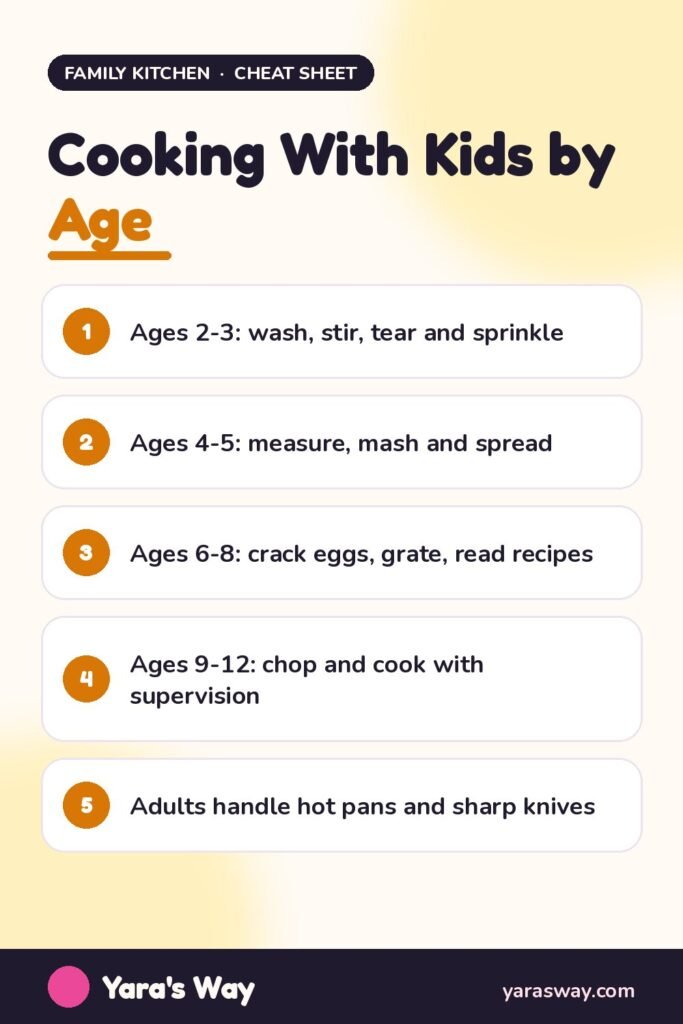
Ages 2–3: little helpers
- Wash fruit and vegetables in a bowl of water.
- Tear lettuce and herbs.
- Tip pre-measured ingredients into a bowl.
- Stir cold mixtures (with a big spoon and a big bowl).
- Press the blender button — with you holding the lid firmly.
- Arrange toppings on a pizza or a plate.
Great first recipe: our Strawberry Banana Sunshine Smoothie — lots of tipping and button-pressing.
Ages 4–5: growing confidence
- Spread soft fillings, sauces and nut or seed butters with a blunt knife.
- Cut soft foods like banana, strawberries and cooked potato with a child-safe knife.
- Mash avocado or potato.
- Whisk eggs and stir batters.
- Sprinkle cheese and toppings.
- Count and sort ingredients.
Great first recipe: Build-Your-Own Mini Veggie Pizzas.
Ages 6–8: real cooks in training
- Crack eggs (into a separate cup, so shells are easy to fish out).
- Measure with spoons and cups, and level them off.
- Grate cheese and vegetables, watching their fingers.
- Peel with a Y-shaped peeler.
- Read a simple recipe aloud and tick off ingredients.
- Pack their own lunchbox from ingredients you’ve prepped.
Great first recipe: Spinach Monster Pancakes, with an adult handling the hob.
Ages 9–12: mini chefs
- Follow a full recipe from start to finish, with you nearby.
- Use a real knife with the “claw grip” and “bridge grip” for safe chopping.
- Cook on the hob with supervision: scrambling eggs, boiling pasta, simple stir-fries.
- Use the oven with oven gloves and an adult present.
- Plan a family meal and write the shopping list.
Great first recipe: Hidden-Veggie Monster Mac & Cheese — boiling, blending and stirring, start to finish.
Safety rules for cooking with kids
- Wash hands before cooking and after touching raw meat or eggs.
- Tie back long hair and roll up sleeves.
- Always ask before using knives, the hob, the oven or appliances.
- Pan handles point inward, away from the edge of the hob.
- Hot things go on a heatproof mat — and we say “hot!” out loud when carrying them.
- Don’t taste raw dough or batter made with raw eggs or flour.
How to make cooking with kids fun (and keep your sanity)
- Pick a calm time. Weekend breakfasts or baking sessions beat the 5:30pm rush.
- Set up first. Measure out ingredients and get equipment ready before inviting little ones in.
- Use a sturdy step stool so they can reach the counter safely.
- Give them real jobs. Kids can tell when a task is pretend.
- Lower the bar. Lumpy batter and uneven slices are part of learning.
- Clean up together. Wiping and sweeping count as kitchen skills too.
- Let them name the dish. “Dinosaur pasta” will be eaten faster than “pasta with vegetables”.
No time for cooking with kids every day?
You don’t need to. One small “kid job” per meal is plenty: tearing the salad leaves, setting the table, stirring the sauce. Over a few months those small jobs build real skills — and a child who feels part of family meals.
And while you’re finishing the cooking, younger children can stay entertained with a quick learning game on our sister site, Bright Minds Quiz.
Easy first recipes for cooking with kids
Choose recipes with lots of hands-on steps, short cooking times and a result children can be proud of. These are some of our favourites to start with:
- Build-your-own mini veggie pizzas: spreading, sprinkling and decorating are perfect for every age.
- Strawberry banana smoothie: measuring, peeling and pressing the button (with an adult at the blender).
- Crunchy apple nachos: arranging and sprinkling toppings, with no heat needed.
- Beetroot pink muffins: mashing, mixing and filling cases, and the pink colour is a guaranteed hit.
Cooking with kids builds life skills
Cooking with kids isn’t only about food. Measuring teaches maths, reading a recipe builds literacy, and following steps in order develops planning skills. Cooking with kids also builds confidence: a child who has made dinner for the family feels proud and capable. And because children who cook are more willing to taste, cooking with kids is one of the best ways to support a picky eater.
Start small with one recipe a week, and let your child choose it. Our guide to baking with kids has easy recipes to begin with, and family mealtimes are the perfect place to enjoy the results. Cooking with kids may be messy, but the skills last a lifetime.
Frequently asked questions
What age can children start helping in the kitchen?
Children as young as two can wash vegetables, tear lettuce and stir cold mixtures with close supervision. The key is matching the job to their skills and staying right beside them.
When can children use a knife?
Many children can start with a child-safe knife for soft foods like banana or cooked potato from around four or five, with an adult guiding them. Teach the “bridge” and “claw” grips before moving on to sharper knives, and only when you feel confident they’re ready.
How do I handle the mess when cooking with kids?
Expect it and plan for it: an apron, a wipe-clean mat, small bowls for ingredients and a cleaning-up job built into every session. Tidying up is part of cooking, and children learn that too.
The bottom line
Cooking with children doesn’t need to be perfect or Instagram-worthy. A few minutes of stirring, sprinkling or measuring builds skills, confidence and a healthier relationship with food. Start small, choose jobs that fit your child’s age, keep safety rules simple and consistent, and celebrate whatever ends up on the plate, however lopsided.