Weekday evenings with children can feel like a race: school pick-up, homework, activities, bath time — and somewhere in the middle, dinner. When there’s no plan, it’s easy to fall back on the same few meals or a takeaway. This meal prep plan is the one we use at home.
Meal prep doesn’t mean spending your whole Sunday batch-cooking 20 identical containers. For most families, one focused hour is enough to take the pressure off the whole week. Here’s exactly how we do it.
Key takeaways
- Plan first: five dinners, a breakfast rotation and lunchbox building blocks.
- Prep components (washed veg, cooked grains, sauces), not entire meals.
- Store food safely: cool quickly, refrigerate in sealed containers and use within a few days.
Step 1: Plan the week (10 minutes)
Before you touch a knife, sit down with a coffee and plan. Write down:
- Five dinners. Include one “kid favourite”, one new recipe, one leftovers night and one super-quick meal.
- Two or three breakfasts to rotate.
- Lunchbox building blocks using our 5-part lunchbox formula.
- Snacks for after school.
Then write a shopping list sorted by aisle. A free planner like the NutrientsCalculator Meal Planner can turn your plan into a shopping list for you.
A sample week
| Day | Dinner | Prep ahead |
|---|---|---|
| Monday | Hidden-veggie mac & cheese | Blend the veggie sauce on Sunday |
| Tuesday | Chicken, rice and roasted veg | Cook rice and roast veg on Sunday |
| Wednesday | Leftovers night | — |
| Thursday | Pasta with carrot tomato sauce | Make a double batch of sauce |
| Friday | Build-your-own mini pizzas | Chop toppings on Thursday |
Step 2: The one-hour prep session
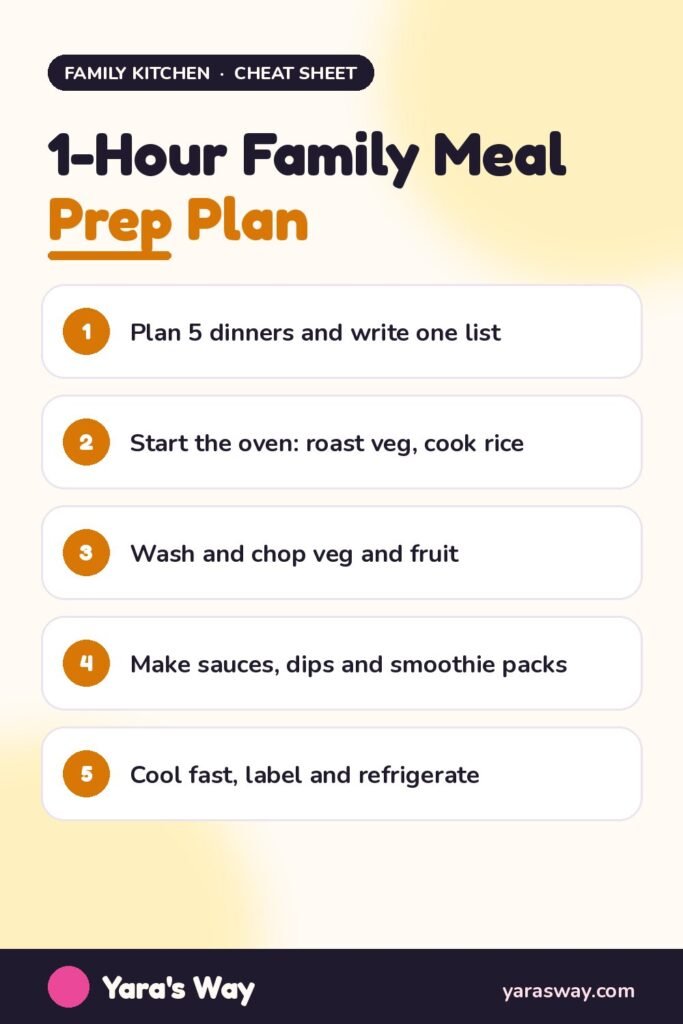
The order matters. Start with things that take the longest to cook, and prep while they’re in the oven or on the hob.
Minutes 0–10: get things cooking
- Put a tray of vegetables in the oven to roast (squash, peppers, sweet potato, carrots).
- Start a pot of rice or pasta.
- Boil a few eggs for lunchboxes and snacks.
Minutes 10–30: wash and chop
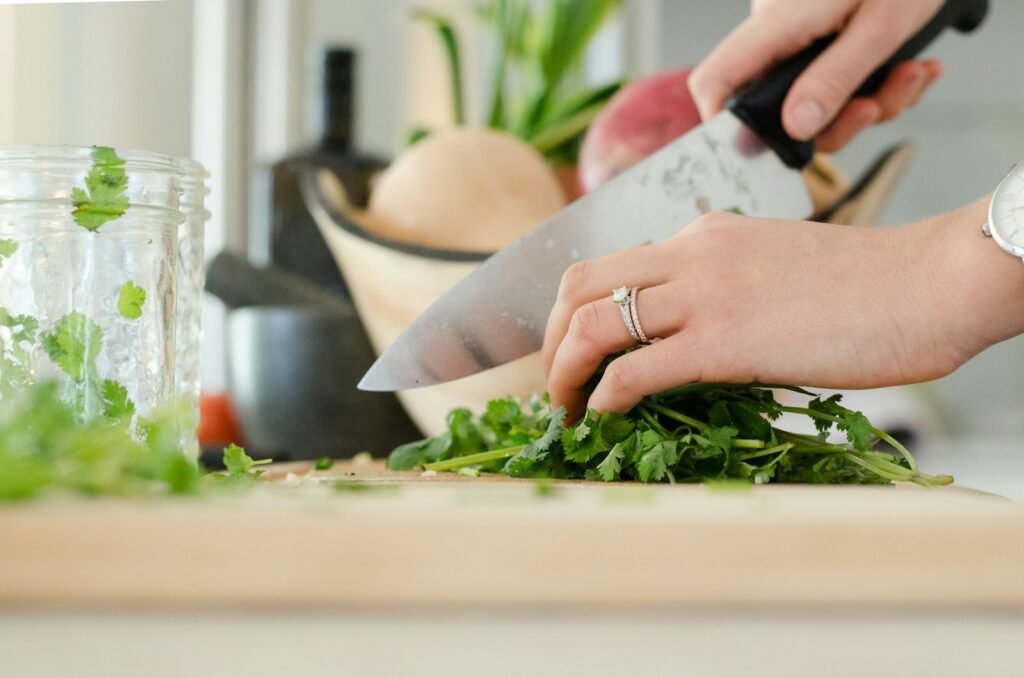
- Wash and cut carrot, cucumber and pepper sticks. Store them in a container of water in the fridge — they stay crunchy for days.
- Wash fruit and portion berries into small containers.
- Grate cheese for the week.
Minutes 30–45: sauces and bases
- Blend a hidden-veggie cheese sauce or a tomato sauce with grated carrot.
- Make a batch of hummus or a yogurt dip.
- Prepare freezer smoothie packs: banana slices and berries in bags, ready to blend with milk and yogurt — like our Sunshine Smoothie.
Minutes 45–60: bake, cool and store
- Bake a batch of no-added-sugar muffins or pancakes to freeze.
- Spread cooked rice on a tray to cool quickly, then refrigerate.
- Label containers with the contents and date.
Storage and food safety
Good meal prep is safe meal prep. A few rules keep everything fresh:
- Cool cooked food quickly — ideally within one to two hours — then refrigerate.
- Rice needs extra care. Cool it fast, keep it in the fridge and use it within a day or so. Reheat only once, until piping hot.
- Use sealed containers and keep your fridge at 5°C or below.
- Most cooked dishes keep around three days in the fridge. Freeze anything you won’t eat by then.
- Reheat until steaming hot all the way through.
Freezer favourites for busy weeks
- Pancakes and muffins — straight from freezer to toaster or lunchbox.
- Smoothie packs.
- Sauces in portions (ice cube trays work brilliantly for little portions).
- Unbaked mini pizzas, wrapped individually.
- Soups and stews.
Get the kids involved
Meal prep is a perfect job for little helpers. Children can wash fruit, fill smoothie bags, sprinkle cheese on pizzas and decorate labels. Older kids can be in charge of making the dip or packing the snack box. See our guide to age-by-age kitchen jobs for ideas.
Keep it flexible
The point of meal prep is to make life easier, not to add another thing to feel guilty about. Some weeks you’ll do the full hour; some weeks you’ll just chop carrots and cook rice. Both count. Even a 20-minute prep session can save you an hour of stress across the week.
Start with the plan, add one prep session, and build from there. After a few weeks it will feel like second nature.
A meal prep shopping list to start with
If you’re new to meal prep, this basic list covers most of the plan above. Adjust it to what your family enjoys:
- Vegetables: carrots, cucumber, peppers, butternut squash, sweet potatoes, broccoli, a bag of frozen peas and frozen spinach.
- Fruit: bananas, apples, berries (fresh or frozen) and a few oranges or satsumas.
- Grains: rice, pasta, oats, wholemeal wraps and wholegrain bread.
- Protein: eggs, chicken, tinned beans and chickpeas, cheese and plain yogurt.
- Store cupboard: tinned tomatoes, low-salt stock, olive oil, herbs and spices.
Meal prep vs batch cooking
Meal prep and batch cooking work brilliantly together, but they’re slightly different. Meal prep means preparing ingredients and components for the next few days: washed veg, cooked grains, sauces and snacks ready to assemble. Batch cooking means cooking whole meals in bulk to freeze for weeks ahead. Many families do a little meal prep every Sunday and a bigger batch cook once a month. Read our batch cooking guide and our list of freezer meals for kids to combine the two. With both in place, weekly meal prep takes even less time.
Frequently asked questions
How long does meal prep last in the fridge?
Most cooked dishes keep for around three days in the fridge when cooled quickly and stored in sealed containers. Cooked rice should be used within a day. Anything you won’t eat in time is best frozen as soon as it’s cool.
Do I have to prep on Sunday?
Not at all. Pick whichever day suits your family. Some parents prefer two shorter sessions, for example Sunday and Wednesday, so food stays fresher towards the end of the week.
What are the best containers to use?
Clear, stackable containers with tight lids make it easy to see what you have. Small pots are useful for dips and snacks, and freezer bags laid flat save space in the freezer.
How do I stop my family getting bored?
Prep components rather than finished meals. Roasted vegetables can go into pasta on Monday, wraps on Tuesday and a frittata on Thursday, so the same hour of work produces several different meals.
Can I meal prep for a baby or toddler too?
Yes. Set aside a portion of plain roasted vegetables, rice or pasta before adding salt or sauces, then mash or chop it to the right texture. Small portions frozen in ice cube trays make quick, ready-made meals for little ones.
Sources and further reading