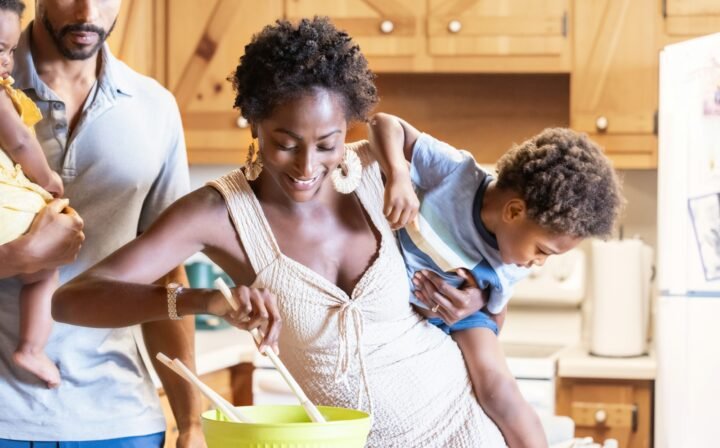
Batch cooking is one of the best gifts you can give your future self. Spend a couple of hours cooking a few big pots of food at the weekend, and you’ll have healthy, homemade dinners ready on the nights when there’s no time or energy to cook.
For families, batch cooking also means fewer takeaways, less food waste and calmer evenings. Here are seven easy steps to get started, the best recipes to make in bulk, and the food safety rules that keep everything safe.
Key takeaways
- Batch cooking means making large quantities of a few recipes and freezing portions.
- Sauces, soups, stews, curries and bakes freeze best.
- Cool food within one to two hours, then refrigerate or freeze it.
- Defrost in the fridge and reheat until steaming hot, only once.
Why batch cooking works for busy families
Most of the effort in cooking is the same whether you make two portions or ten: chopping onions, browning mince, washing up the pan. Batch cooking spreads that effort across several meals. It also helps with healthy eating, because homemade meals in the freezer are just as quick as convenience food, and you control the salt, sugar and vegetables.
Batch cooking is different from weekly meal prep, which focuses on preparing ingredients for the next few days. If you’d like to try that too, see our one-hour family meal prep plan.
Batch cooking for families in 7 easy steps
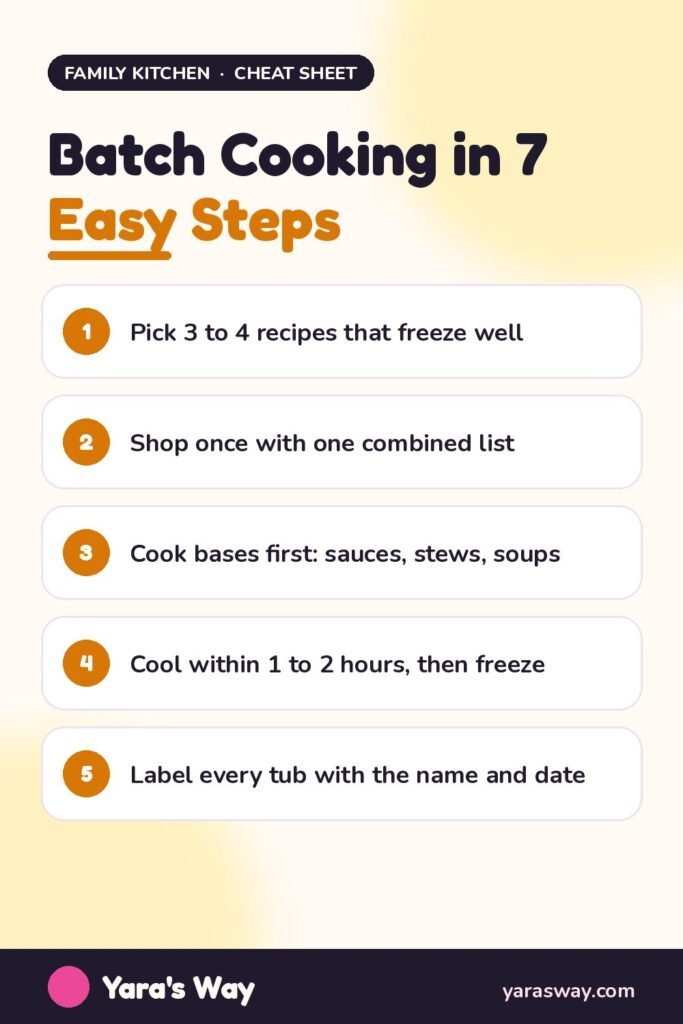
Step 1: Choose three or four recipes
Pick recipes that your family already likes and that freeze well. Starting with three is plenty; you can build up over time.
Step 2: Write one combined shopping list
Multiply each recipe and combine the ingredients into one list. Buying larger packs of mince, tins of tomatoes and bags of onions usually saves money too.
Step 3: Prep all the veg at once
Chop every onion, carrot and pepper you’ll need for all the recipes before you start cooking. A food processor makes this much faster.
Step 4: Start with a “base”
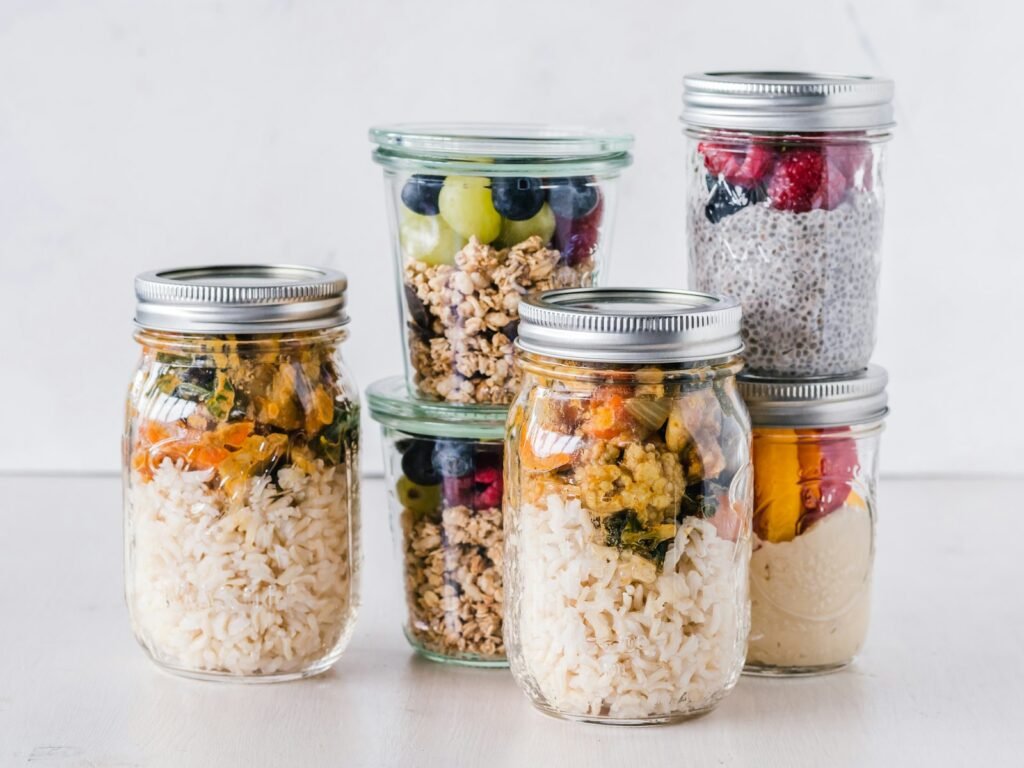
Many family recipes start from the same base. Cook a huge pan of onion, carrot, celery and garlic with mince or lentils and tinned tomatoes, then split it: one part becomes bolognese, another becomes chilli with beans and spices, and another becomes a cottage pie filling.
Step 5: Cook the oven dishes while the hob is busy
Use the oven for traybakes, roasted vegetables, muffins or a lasagne while sauces simmer on the hob.
Step 6: Cool quickly and safely
The NHS advises cooling food within about one to two hours before refrigerating or freezing. Divide large batches into smaller, shallow containers to speed it up, or stand containers in cold water. Don’t put hot food straight into the fridge.
Step 7: Portion, label and freeze
Freeze in family-sized and child-sized portions. Label every tub with the recipe name and the date. Flat freezer bags save space and defrost faster.
The best recipes for batch cooking
- Bolognese and lentil ragu for pasta, lasagne or jacket potatoes.
- Chilli con carne or veggie chilli.
- Mild curries and dhal.
- Soups: tomato and lentil, butternut squash, minestrone.
- Stews and casseroles with plenty of vegetables.
- Meatballs in tomato sauce.
- Hidden-veg cheese sauce, like the one in our Hidden-Veggie Mac and Cheese.
- Breakfast bakes: pancakes and muffins.
For a full list of child-friendly ideas, read our guide to freezer meals for kids.
A sample two-hour batch cooking session
| Time | Task |
|---|---|
| 0:00 to 0:20 | Chop all vegetables; preheat the oven |
| 0:20 to 0:50 | Cook a big mince or lentil base; put a tray of veg in to roast |
| 0:50 to 1:20 | Split the base into bolognese and chilli; start a pot of soup |
| 1:20 to 1:45 | Bake muffins; blend the soup |
| 1:45 to 2:00 | Portion into shallow tubs to cool; wash up |
Once everything is cool, label and freeze. One batch cooking session like this can cover six to ten family dinners plus breakfasts and lunchbox bakes.
Batch cooking food safety
- Cool within one to two hours and then refrigerate or freeze.
- Take extra care with rice: cool it within an hour and eat refrigerated rice within 24 hours. Rice is best cooked fresh rather than batch-frozen if you’re unsure.
- Defrost thoroughly, ideally in the fridge overnight, and use food defrosted in the fridge within 24 hours.
- Reheat until steaming hot all the way through, and don’t reheat food more than once.
- Use within a sensible time: most home-cooked meals are best eaten within about three months of freezing for good quality.
Getting kids involved in batch cooking
Batch cooking is a great family activity. Children can wash vegetables, stir sauces (with supervision), fill muffin cases and decorate labels for the freezer. Our guide to cooking with kids by age suggests jobs for every stage. Children who help cook are often keener to eat the results, too.
Batch cooking also saves money; see our budget family meals for cheap recipes that scale up well.
Frequently asked questions
How long does batch cooking take?
A typical session takes one to three hours, depending on how many recipes you make. Start small with one or two recipes and build up.
Can I batch cook for a baby or toddler?
Yes. Take out portions for little ones before adding salt, then mash or blend them. Ice cube trays make perfect small portions. See our guide to toddler meals.
What doesn’t freeze well?
Salad leaves, cucumber, raw tomatoes, boiled eggs and some creamy sauces don’t freeze well. Pasta and potatoes can turn soft, so slightly undercook them if freezing.
The bottom line
Batch cooking turns a couple of hours at the weekend into a freezer full of healthy family dinners. Choose a few favourite recipes, cook in bulk, cool and freeze safely, and label everything. Your weeknight self will thank you.
Sources and further reading