Baking with kids is one of the simplest ways to have fun together at home. There’s measuring, mixing, rolling, decorating and, best of all, eating the results. Along the way, children practise maths, reading, patience and fine motor skills, often without even noticing.
Baking doesn’t have to mean sugary cakes, either. With fruit, oats and vegetables, plenty of bakes can be both healthier and delicious. Here are 10 fun, easy recipes, age-by-age jobs and practical tips to make baking with kids enjoyable for everyone.
Key takeaways
- Baking with kids builds maths, reading and fine motor skills.
- Choose simple recipes with lots of hands-on steps.
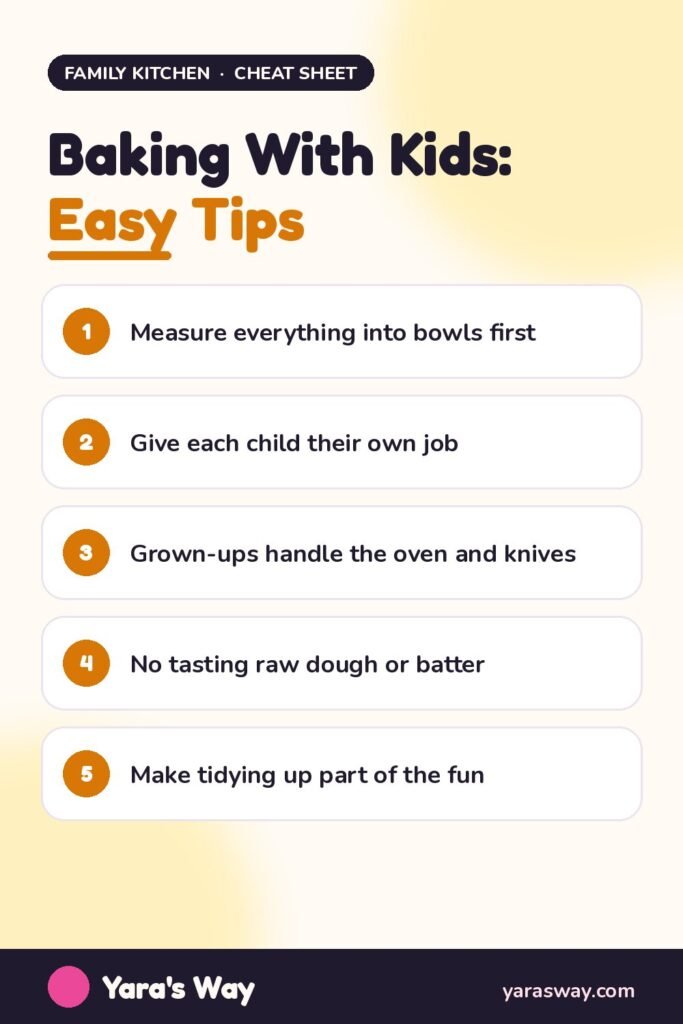
- Adults handle the oven, hot trays and sharp knives.
- Don’t let children eat raw dough or batter, which contains raw flour and often raw egg.
Why baking with kids is worth the mess
Children learn by doing, and the kitchen is full of real-life learning. Weighing flour teaches numbers and measurement. Reading a recipe builds literacy. Waiting for muffins to bake teaches patience. And watching a runny batter turn into a cake is a little bit of science magic.
Baking with kids also builds confidence and a positive relationship with food. Children who help make food are often more willing to try it, which is useful if you have a picky eater. Our guide to cooking with kids by age has more on this.
Baking jobs by age
| Age | Baking jobs |
|---|---|
| 2 to 3 | Tipping in pre-measured ingredients, stirring, mashing bananas, sprinkling toppings |
| 4 to 5 | Spooning batter into cases, using cookie cutters, cracking eggs into a cup, rolling dough |
| 6 to 8 | Weighing ingredients, reading simple recipes, rubbing butter into flour, setting a timer |
| 9 to 12 | Following a recipe with supervision, using the oven with an adult, making icing and decorating |

10 fun, easy recipes for baking with kids
- Beetroot Pink Muffins: no added sugar, and the pink colour is a guaranteed hit.
- Banana oat cookies: mashed banana, oats and a few raisins, nothing else needed.
- Cheese scones: rubbing butter into flour is perfect for little hands.
- Mini veggie pizzas: spreading and decorating are great fun.
- Carrot cake muffins with grated carrot and less sugar than a classic cake.
- Soda bread: no yeast, no proving, and ready in under an hour.
- Apple and cinnamon flapjacks with plenty of oats.
- Savoury courgette and cheese muffins for lunchboxes.
- Blueberry yoghurt loaf.
- Homemade breadsticks twisted into fun shapes.
Many of these freeze brilliantly for lunchboxes. See our lunchbox snacks and freezer meals for kids for ideas.
Kitchen safety when baking with kids
- Wash hands before starting and after handling raw egg.
- Adults handle the oven, hot trays and sharp knives. Teach older children to use oven gloves with supervision.
- No raw dough or batter. Raw flour and raw egg can carry bacteria, so save the tasting for the finished bake.
- Turn pan handles inward and keep a stable step stool at the counter.
- Check allergies if friends are joining in, especially nuts, eggs, milk and wheat.

Tips to keep baking with kids fun (and tidy)
- Prepare first. Measure ingredients into small bowls before you call the children in.
- Use a big tray or mat under mixing bowls to catch spills.
- Give everyone a job. With siblings, split tasks so nobody waits too long.
- Keep it short. Choose recipes that take 30 to 45 minutes for younger children.
- Embrace imperfection. Lopsided muffins taste just as good.
- Tidy together. Washing up in warm, bubbly water is a favourite job for many children.
Healthier swaps for baking with kids
You can make most bakes a little healthier without losing the fun. Use ripe bananas or apple sauce to sweeten instead of some of the sugar, swap half the white flour for wholemeal, add grated carrot or courgette, and use oats for texture. Reducing sugar gradually helps children get used to less sweet tastes; our guide to reducing sugar for kids explains more. For extra fibre ideas, see fibre for kids.
Make baking with kids a tradition
A regular baking afternoon, perhaps every Sunday or once a month, gives children something to look forward to. Let them choose the recipe from a few options, write the shopping list together and keep a family recipe book with photos of each bake. These traditions often become some of children’s happiest food memories, and they build a lifelong love of cooking.
Baking is also perfect for celebrations: our guide to party food for kids includes bakes children can make for their own party.
Baking with kids who are picky eaters
Baking is a gentle way to introduce new ingredients to cautious eaters. A child who refuses courgette on a plate may happily grate it into muffin batter and then eat the muffin they made. Talk about the ingredients as you go, let them smell and touch them, and don’t make a big deal about tasting. Over time, these relaxed experiences make new foods feel familiar. Our guide to trying new foods shares more ideas, and baking with kids fits perfectly alongside them.
Learning through baking with kids
Turn baking into a mini lesson without it feeling like school. Younger children can count spoonfuls and name colours; older children can double a recipe, read the scales and work out the timings. Ask questions like “why do you think the muffins rose?” It’s a hands-on way to practise maths and science, and it makes baking with kids even more rewarding.
Frequently asked questions
What age can you start baking with kids?
Children as young as two can help with simple jobs like stirring and sprinkling, with close supervision. Jobs become more complex as they grow.
Can kids lick the spoon?
It’s best not to. Raw flour and raw egg can carry harmful bacteria. Make tasting the finished bake the reward instead.
How can I bake with a toddler without chaos?
Prepare everything in advance, give them one or two simple jobs, keep sessions short and expect a bit of mess. A splash mat and an apron help.
The bottom line
Baking with kids is messy, joyful and full of learning. Choose simple, healthier recipes, give children age-appropriate jobs, keep the oven and knives for grown-ups and skip the raw dough. The memories, and the muffins, are worth every bit of flour on the floor.
Sources and further reading