Fibre for kids doesn’t get as much attention as protein or sugar, but it’s just as important. Fibre keeps digestion moving, helps prevent constipation, feeds the good bacteria in the gut and helps children feel full between meals. Yet most children in the UK don’t eat as much fibre as is recommended.
The good news is that small, simple swaps add up quickly. In this guide we cover how much fibre kids need, which foods provide the most, and 12 easy ways to add more fibre for kids without any complaints at the table.
Key takeaways
- Children aged 2 to 5 need about 15g of fibre a day; 5 to 11 year olds need about 20g.
- Wholegrains, fruit, vegetables, beans and lentils are the best sources of fibre for kids.
- Increase fibre gradually and offer plenty of water.
- For under-twos, wholegrains shouldn’t be the only starchy food, as they can fill little tummies too quickly.
Why fibre for kids matters
Fibre is the part of plant foods that the body can’t fully digest. As it moves through the gut, it adds bulk and softness to stools, which helps prevent constipation, a common problem in childhood. Some types of fibre also feed the helpful bacteria that live in the gut.
Fibre-rich foods are filling, so they help children feel satisfied, and they usually come packed with vitamins and minerals too. Building a taste for wholegrains, fruit and vegetables early sets up healthy habits for life.
How much fibre do kids need?
UK guidelines on fibre for kids recommend:
| Age | Fibre per day |
|---|---|
| 2 to 5 years | 15g |
| 5 to 11 years | 20g |
| 11 to 16 years | 25g |
| 16 years and over | 30g |
There isn’t a set figure for children under two. The NHS advises that wholegrain foods can fill young children up before they’ve had enough calories and nutrients, so for under-twos they shouldn’t be the only starchy food offered. From the age of two, more wholegrain foods can be introduced gradually.

The best sources of fibre for kids
- Wholegrains: porridge oats, wholegrain cereals, wholemeal bread, wholewheat pasta and brown rice.
- Beans and pulses: baked beans, kidney beans, chickpeas, lentils and peas.
- Vegetables: especially sweetcorn, broccoli, carrots, sweet potato with skin and green beans.
- Fruit: raspberries, pears, apples (with skin), bananas and oranges.
- Potatoes with skins: jacket potatoes and skin-on wedges.
- Seeds: ground flaxseed or chia stirred into porridge or yoghurt.
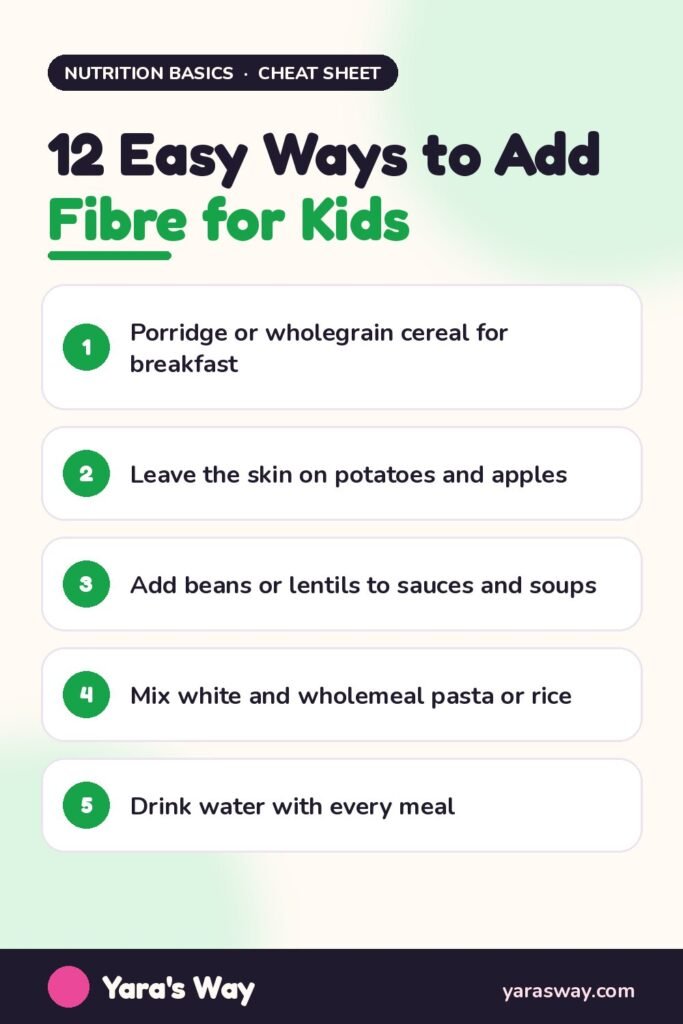
12 easy ways to add fibre for kids
- Start the day with porridge. Top it with berries or sliced banana for extra fibre for kids.
- Choose wholegrain cereals that are also low in sugar, such as plain wheat biscuits.
- Go half and half. Mix white and wholewheat pasta, or white and brown rice, to ease the change.
- Swap to wholemeal or “50/50” bread for sandwiches and toast.
- Leave the skins on potatoes, apples and pears (washed well).
- Add beans or lentils to bolognese, chilli, curries and soups.
- Bake with oats: muffins, flapjacks and crumbles.
- Snack on fruit and veg sticks instead of crisps or biscuits.
- Serve hummus as a dip; chickpeas are rich in fibre.
- Add frozen peas and sweetcorn to pasta, rice and omelettes.
- Blend veg into sauces, like our Hidden-Veggie Mac and Cheese.
- Try homemade popcorn as a wholegrain snack for older children (not for young children because of choking risk).

A fibre-rich day for kids
Here’s how fibre for kids can add up across an ordinary school day for a seven-year-old:
| Meal | Fibre for kids ideas |
|---|---|
| Breakfast | Porridge with raspberries and a sprinkle of ground flaxseed |
| Lunch | Wholemeal wrap with hummus, grated carrot and an apple |
| Snack | A pear and a few oatcakes |
| Dinner | Lentil bolognese with half-wholewheat pasta and peas |
None of these meals feel “health food”, but together they comfortably reach the recommended 20g of fibre for kids of this age.
Don’t forget water
Fibre works best with plenty of fluid. When you increase fibre for kids, make sure they also drink regularly through the day, ideally water or milk. Our guide to the best drinks for kids explains what to offer. Increase fibre gradually over a couple of weeks, too, as a sudden big change can cause wind or tummy ache.
Fibre for kids who are fussy eaters
Picky eaters often prefer white bread and plain pasta, and that’s okay. Small swaps work better than big changes: try “50/50” bread, mix a few wholewheat pasta shapes into white pasta, or bake with half wholemeal flour. Smoothies are an easy way to add fruit and oats; try our Strawberry Banana Smoothie. For more ideas, see our guides to vegetables for kids and healthy breakfast ideas.
Easy fibre swaps at the supermarket
A few changes to your weekly shop make fibre for kids almost automatic. Choose wholegrain or “50/50” bread, plain wholegrain breakfast cereals, wholewheat pasta shapes, brown rice or mixed rice, tinned beans and chickpeas, frozen peas and sweetcorn, and a bag of porridge oats. Keep a fruit bowl at child height and a box of chopped veg in the fridge so the high-fibre choice is also the easiest one.
When to see a doctor
If your child is often constipated, has tummy pain, or there’s blood in their poo, speak to your GP. Fibre and fluids help many children, but constipation can have other causes that need medical advice.
Frequently asked questions
Can kids have too much fibre?
It’s rare for children to eat too much fibre from normal foods. Very high-fibre diets can fill small children up too quickly, which is why under-twos shouldn’t have only wholegrain starchy foods.
Is fruit juice a good source of fibre for kids?
No. Juicing removes most of the fibre. Whole fruit is a much better choice, and juice should be limited to a small glass with a meal.
Are high-fibre cereals good for kids?
Many are, but check the sugar content. Plain wholegrain cereals with fruit added at home are usually the best option.
The bottom line
Fibre for kids supports healthy digestion, steady energy and a happy gut. Choose wholegrains where you can, add beans and lentils to family meals, leave the skins on, offer fruit and vegetables at every meal and keep the water flowing. Small swaps, made gradually, are all it takes.
Sources and further reading