Getting enough vegetables for kids onto the plate (and into their tummies) is one of the most common worries parents share with us. If your child pushes peas around the plate or picks every fleck of green out of their pasta, you’re in very good company.
The encouraging news is that children’s tastes change, and small, steady habits make a big difference. This guide covers the best vegetables for kids to start with, how much they need, and 15 easy ways to serve more veg without a battle.
Key takeaways
- Children should aim for at least five portions of fruit and vegetables a day.
- A child’s portion is roughly what fits in the palm of their hand.
- Fresh, frozen and tinned vegetables all count.
- Repeated, relaxed exposure works better than pressure or bribes.
Why vegetables for kids matter
Vegetables provide fibre, vitamins and minerals that help children grow, keep their digestion healthy and support their immune system. Different colours bring different nutrients, which is why variety matters as much as quantity.
Eating vegetables regularly in childhood also builds habits that last. Children who grow up seeing veg as a normal part of meals are more likely to keep eating them as adults.
How many vegetables do kids need?
The NHS says children should eat at least five portions of a variety of fruit and vegetables a day. Because children are smaller, their portions are smaller too: as a rough guide, one portion is the amount they can fit in the palm of their hand.
That might be a few broccoli florets, a small handful of peas, or a couple of tablespoons of grated carrot in a sauce. Spread across the day, five portions is more achievable than it sounds.
The best vegetables for kids to start with
Begin with vegetables that are naturally sweet or mild. These are often the easiest vegetables for kids to accept:
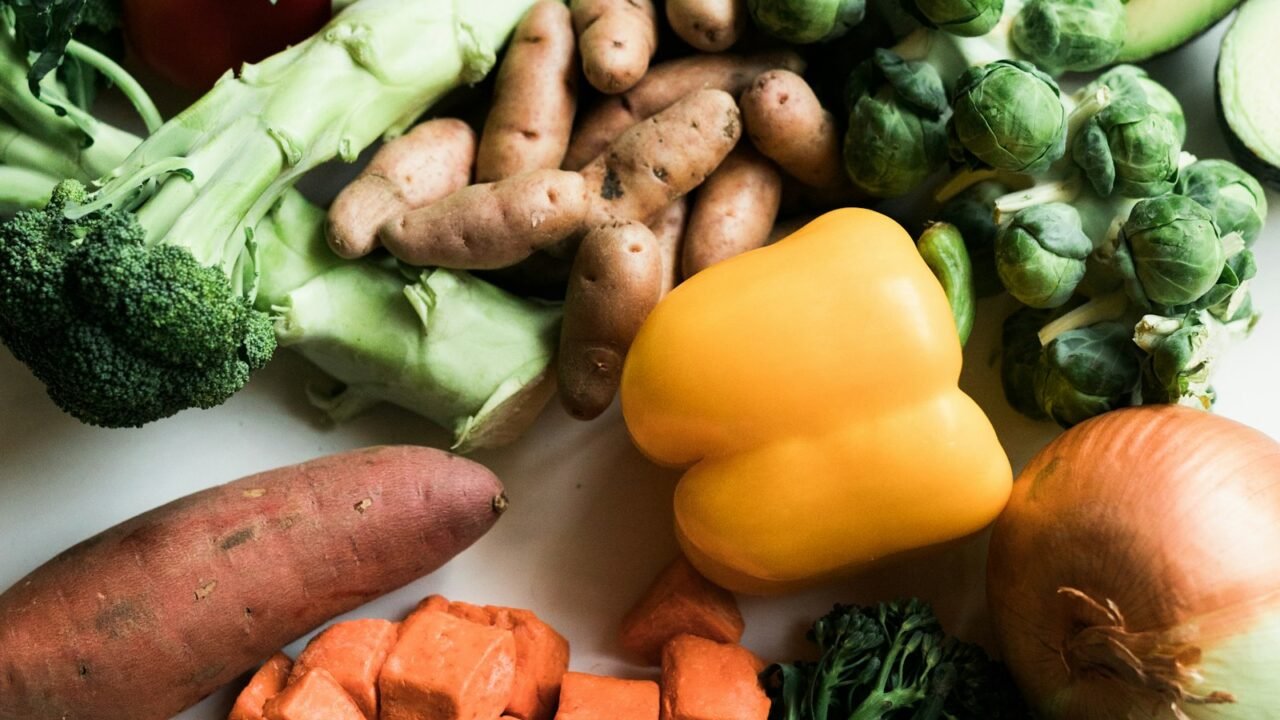
- Sweet: carrots, sweetcorn, peas, sweet potato, butternut squash and red pepper.
- Mild: cucumber, courgette, cauliflower and green beans.
- Crunchy: sugar snap peas, cucumber sticks and pepper strips.
Once these feel familiar, introduce stronger flavours like broccoli, spinach, cabbage and mushrooms. Interestingly, the NHS suggests starting babies on less sweet vegetables such as broccoli and cauliflower, to help them accept a wider range of tastes.

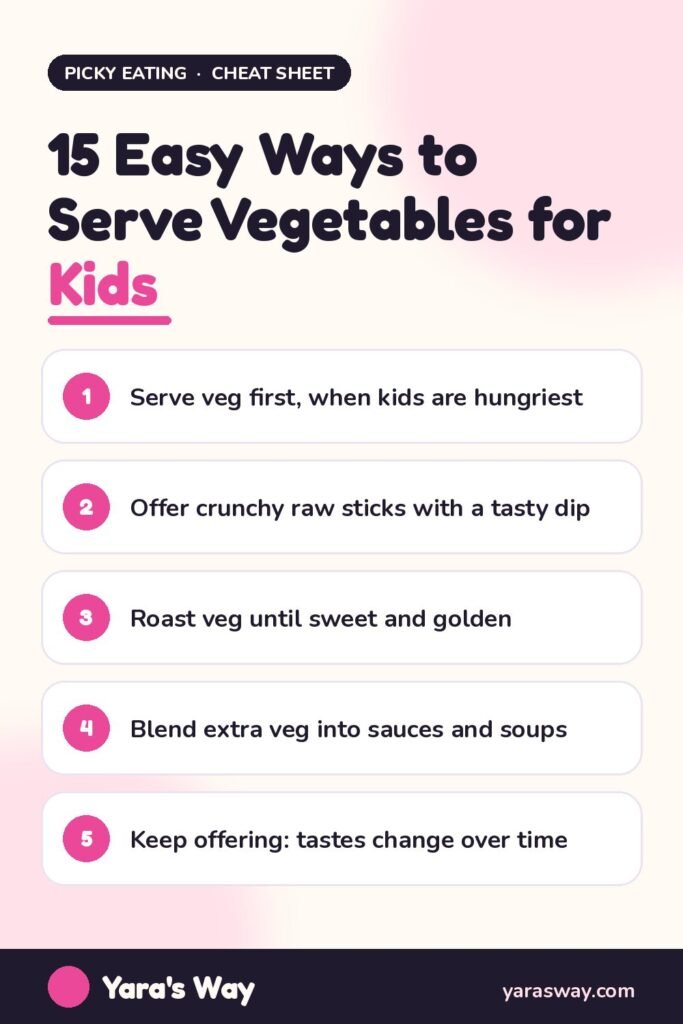
15 easy ways to get more vegetables for kids
At breakfast
- Green pancakes. Blend spinach into the batter, like our Spinach Monster Pancakes.
- Veggie omelette. Add finely chopped peppers, tomatoes and spinach.
- Smoothies. A handful of spinach disappears into a fruity Green Monster Smoothie.
At lunch
- Veg sticks and dip in every lunchbox, with hummus or a yoghurt dip.
- Rainbow wraps with grated carrot, cucumber ribbons and pepper.
- Soup in a flask. Blended vegetable soups are warming and easy to eat.
- Bento boxes with a little compartment of colourful veg. See our bento lunch ideas.
At dinner
- Hidden-veg sauces. Blend squash and cauliflower into cheese sauce, as in our Hidden-Veggie Mac and Cheese.
- Roast until sweet. Roasting brings out natural sugars in carrots, parsnips and peppers.
- Veggie-packed bolognese with grated carrot, courgette and lentils.
- Build-your-own pizzas with a veg topping bar.
- Serve veg first. Put a small plate of vegetables out while dinner finishes cooking, when children are hungriest.
As snacks
- Frozen peas straight from the freezer are a surprise hit with many kids (for over-fives, or slightly defrosted for little ones).
- Veggie muffins with grated courgette or carrot.
- Homemade kale or vegetable crisps baked in the oven.

Hidden vs. visible vegetables
Hiding vegetables in sauces and bakes is a brilliant way to boost nutrition. But children also need to see and taste vegetables in their normal form, or they never learn to like them. We recommend a “hide and show” approach: blend veg into the sauce, and also serve a small portion of the same vegetable on the side. Read more in our guide to hiding vegetables in kids’ food.
Tips for serving vegetables for kids without a fight
- Keep portions tiny. Two green beans is a perfectly good start.
- Don’t bribe or pressure. Offer vegetables calmly and let your child decide how much to eat.
- Eat them yourself. Children copy what they see adults enjoying.
- Offer choice. “Carrots or peas tonight?” gives children a sense of control.
- Make it colourful. Our eat the rainbow challenge turns veg into a game.
- Be patient. It can take many tries before a new vegetable is accepted. See our ideas for trying new foods.
Do frozen and tinned vegetables count?
Yes. Frozen vegetables are picked and frozen quickly, so they’re just as nutritious as fresh, and they’re cheaper and less wasteful. Tinned vegetables count too; choose ones in water without added salt or sugar. Keeping a bag of frozen peas, sweetcorn and spinach in the freezer makes adding vegetables for kids quick on busy nights.
A simple day of vegetables for kids
Here’s what five portions can look like for a primary-school child, without a single battle:
| Meal | Vegetables for kids |
|---|---|
| Breakfast | Spinach blended into pancakes or a smoothie |
| Lunchbox | Cucumber and pepper sticks with hummus |
| After school | A handful of sugar snap peas or cherry tomatoes (quartered for little ones) |
| Dinner | Squash in the pasta sauce, plus peas on the side |
Notice how vegetables for kids appear at every eating occasion, in small amounts. That steady drip of exposure is far more effective than one big pile at dinner. For snack ideas that sneak in more veg, see our healthy after-school snacks.
Frequently asked questions
What are the healthiest vegetables for kids?
There’s no single best vegetable. The healthiest approach is variety: different colours across the week, including dark green leafy veg, orange vegetables and pulses like peas and beans.
Does fruit make up for vegetables?
Fruit counts towards five a day, but vegetables bring different nutrients and usually less sugar. Aim for a mix of both.
My child only eats raw vegetables. Is that okay?
Absolutely. Many children prefer the crunch of raw veg. Raw vegetables for kids are a great option, as long as they’re cut into safe shapes for younger children.
The bottom line
Getting more vegetables for kids is a long game. Start with sweet, mild options, serve small portions often, mix hidden and visible veg, and keep the mood relaxed. Over time, those little tastes add up to a child who genuinely enjoys their vegetables.
Sources and further reading