Most parents know that too much sugar isn’t great for children. What’s harder is knowing how much is too much, where all the sugar is coming from, and how to cut back without turning every trip to the shop into a negotiation. Here’s how to reduce sugar gently and keep the peace.
The answer isn’t banning sweets or lecturing about health. It’s a handful of quiet swaps, a few clear family routines, and a relaxed attitude to the occasional treat.
Key takeaways
- UK guidance recommends children aged 4–6 have no more than 19g of free sugars a day, and children aged 7–10 no more than 24g.
- Much of children’s sugar comes from drinks, cereals, yogurts, biscuits and sweets.
- Small, gradual swaps work better than bans. Treats are fine — as treats.
How much sugar is too much?
The sugars to watch are “free sugars” — sugars added to food and drinks, plus the sugar naturally found in honey, syrups and fruit juice. The sugar inside whole fruit, vegetables and plain milk doesn’t count towards this limit.
| Age | Maximum free sugars per day | Roughly |
|---|---|---|
| 4–6 years | 19g | 5 sugar cubes |
| 7–10 years | 24g | 6 sugar cubes |
| 11 years and over | 30g | 7 sugar cubes |
For children under four, there’s no set limit, but it’s recommended they avoid sugar-sweetened drinks and foods with added sugar. To put those numbers in context, a single can of regular fizzy drink can contain more than a whole day’s limit for a young child.
Where sugar hides in children’s diets
- Drinks: fizzy drinks, squash, “juice drinks”, flavoured milks and fruit juice.
- Breakfast cereals and cereal bars, especially ones marketed at children.
- Flavoured yogurts and fromage frais.
- Biscuits, cakes, sweets and chocolate.
- Sauces: ketchup, barbecue sauce and some pasta sauces.
- “Healthy” snacks: some fruit bars, granola and dried-fruit snacks are high in sugar.
How to read a food label
Look at the “Carbohydrate — of which sugars” line on the nutrition panel. In the UK, foods with more than 22.5g of total sugars per 100g are considered high in sugar, and those with 5g or less per 100g are low. Many packs also use traffic-light colours on the front: more greens, fewer reds is a quick rule of thumb.
Remember that the label shows total sugars, which includes natural sugars from milk and fruit. Check the ingredients list too: sugar can appear as glucose, sucrose, dextrose, syrup, honey or fruit juice concentrate.
10 gentle swaps to reduce sugar
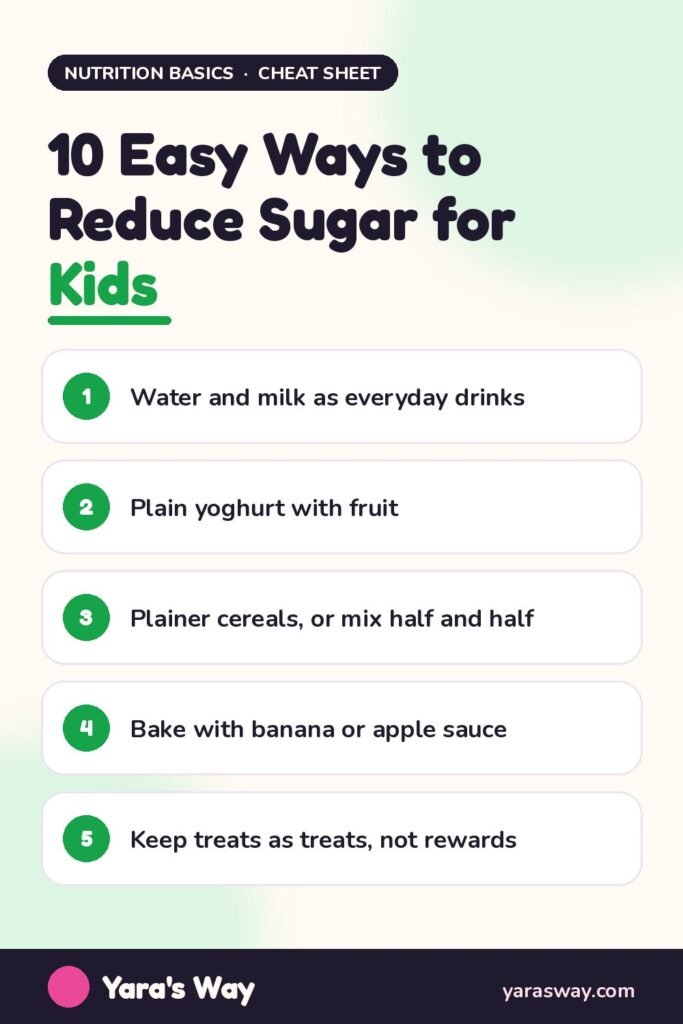
- Water and milk as everyday drinks. This single change makes the biggest difference for most families. Read our guide to the best drinks for kids.
- Plain yogurt with fruit instead of flavoured yogurt. Let children add their own berries or banana.
- Plain cereal with fruit instead of frosted or chocolate cereal — or mix half and half to start.
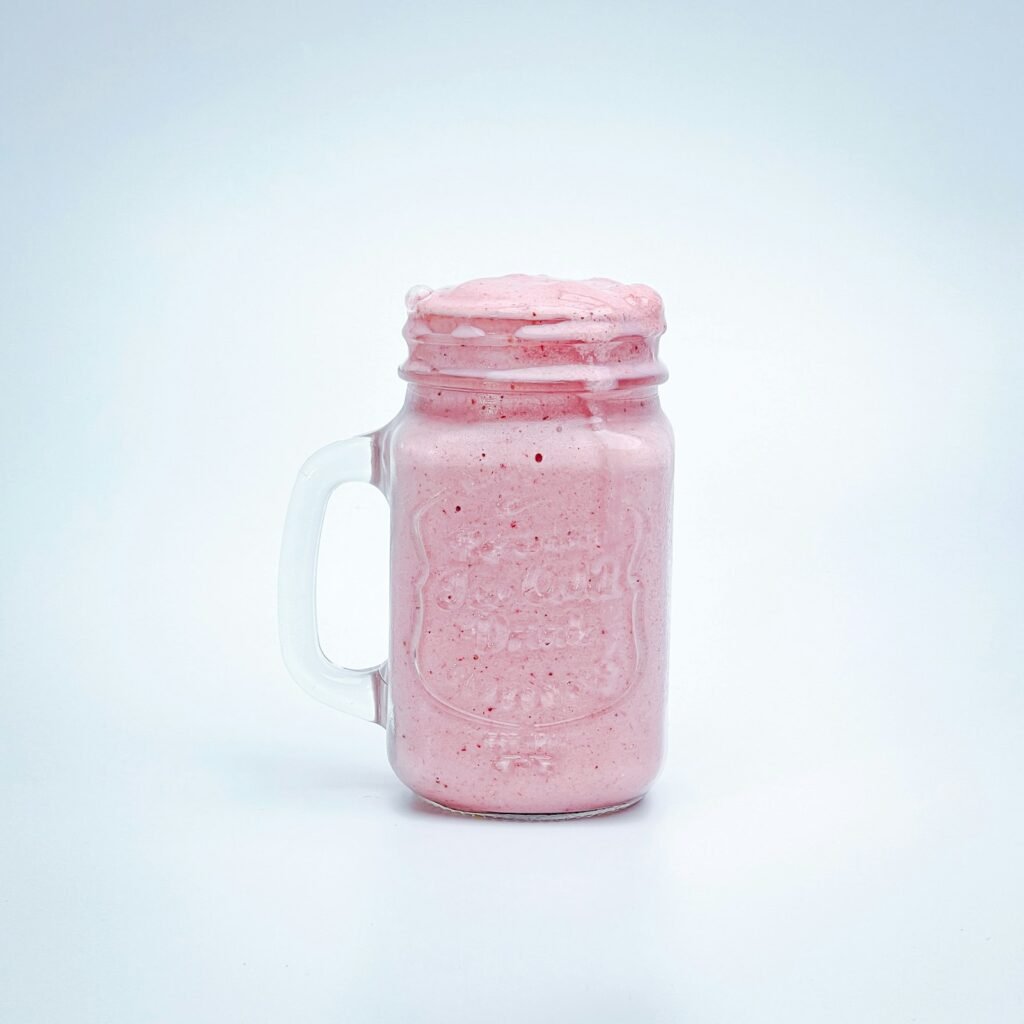
- Homemade smoothies with whole fruit and yogurt, served with meals. Our Sunshine Smoothie has no added sugar.
- Bake with fruit. Ripe banana and apple sauce sweeten muffins without added sugar — try our Beetroot Pink Muffins.
- Fruit-first snacks. Our Apple Nachos feel like a treat but are built on a whole apple.
- Make sauces at home. A quick tomato sauce with grated carrot is naturally sweet.
- Swap biscuits for oatcakes, crackers or rice cakes with a topping.
- Freeze it. Frozen banana slices, yogurt bark and smoothie lollies make great summer treats.
- Reduce gradually. Cut the sugar in your own recipes by a quarter at a time. Taste buds adjust surprisingly quickly.
How to reduce sugar without tantrums
Reduce sugar without banning treats
Forbidden foods become more desirable. Instead, treat sweets as normal foods for particular times — after a weekend meal, at parties, on special occasions.
Don’t use sweets as rewards or comfort
Rewarding with sugar teaches children that sweet food is the prize for good behaviour, or the cure for a bad day. Try stickers, extra story time or a trip to the park instead.
Serve pudding without strings
Making dessert conditional on finishing vegetables makes vegetables the punishment and pudding the prize. Serving a small dessert as part of the meal, regardless, takes away its power.
Change the environment, not the child
If sweets aren’t in the cupboard, there’s no daily argument about them. Keep a fruit bowl at child height and a snack box of healthy options instead.
Involve children in plans to reduce sugar
Let them compare labels at the supermarket, or count sugar cubes against a drink label. Older children often decide for themselves that a drink with nine cubes of sugar is “gross”.
Why reduce sugar? Think teeth
How often children have sugar matters as much as how much. Every sugary snack or drink gives bacteria in the mouth fuel to produce acid that attacks teeth. Keeping sugary foods to mealtimes, rather than grazing through the day, gives teeth time to recover. Pair that with brushing twice a day with a fluoride toothpaste and regular dental check-ups.
The bottom line
You don’t need a sugar-free household to raise healthy kids. Focus on drinks first, swap a few everyday foods, keep treats as treats, and keep the mood relaxed. Small, consistent changes add up to a big difference over a year.
Reduce sugar step by step
Trying to reduce sugar all at once usually leads to complaints. Instead, reduce sugar one area at a time. In week one, swap sugary drinks for water and milk. In week two, reduce sugar at breakfast by choosing plainer cereals. In week three, reduce sugar in snacks with fruit, cheese and oatcakes. By week four, most families find they’ve cut a lot of sugar without any big battles. To reduce sugar even further, bake at home with fruit, like our no-added-sugar muffins, and read our guide to healthy party food for kids for celebrations.
Frequently asked questions
Is the sugar in fruit bad for children?
No. The sugar inside whole fruit comes packaged with fibre, water and vitamins, and it doesn’t count towards the free sugars limit. Fruit juice and smoothies are different, because juicing and blending release the sugars, which is why they’re best kept to mealtimes and small glasses.
Are sweeteners a good way to reduce sugar?
Diet and “no added sugar” drinks aren’t recommended for young children, and they can keep a sweet tooth going. The aim is to help children get used to less sweet tastes overall, rather than simply replacing sugar with sweeteners.
How long does it take for tastes to change?
Many families notice a difference within a few weeks of cutting back gradually. Foods that once tasted normal begin to taste very sweet, which makes it easier to keep going.
What about birthday parties and holidays?
Enjoy them. Special occasions are part of a normal, happy relationship with food. What matters most is the everyday pattern, not the cake at a friend’s party.
Sources and further reading