Food gets most of the attention when we talk about children’s nutrition, but drinks matter just as much. What children drink every day affects their teeth, their appetite at mealtimes and how much sugar they take in — often far more than we realise. In short, the best drinks for kids are water and milk.
The good news is that the best drinks for kids are also the simplest and cheapest: water and milk. Here’s a clear guide to what to offer, by age, based on NHS guidance.
Key takeaways
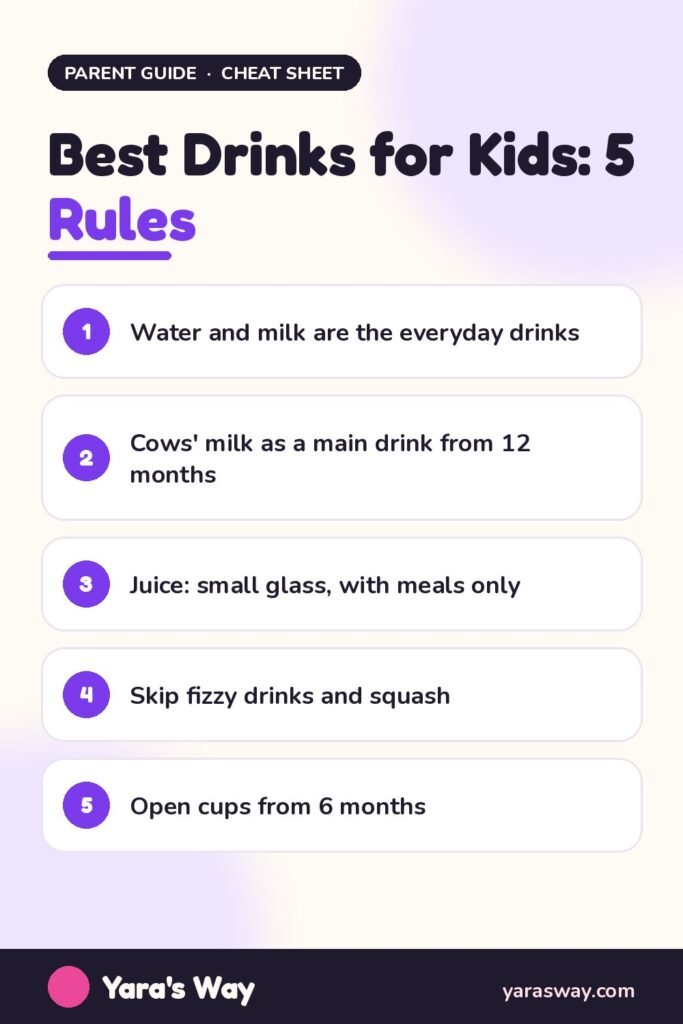
- Water and milk are the best everyday drinks for children.
- Cows’ milk can be a main drink from 12 months; skimmed and 1% milk aren’t suitable as a main drink for under-fives.
- Keep fruit juice and smoothies to mealtimes, and limit them to about one small glass (150ml) a day for children over five.
- Fizzy drinks, squash and “juice drinks” aren’t suitable for young children.
Water: the best drinks for kids start here
Water hydrates without any sugar, doesn’t harm teeth, and won’t fill children up before meals. Babies can start having sips of water from a cup with meals from around six months, once they begin solid foods. (Fully breastfed babies don’t need any water before they start solids.)
To make water more appealing:
- Let children choose their own fun cup or bottle.
- Add slices of fruit or cucumber for a hint of flavour.
- Keep a filled bottle in their school bag and on the table at every meal.
- Drink water yourself — children copy what they see.
Milk: what kind, and when?
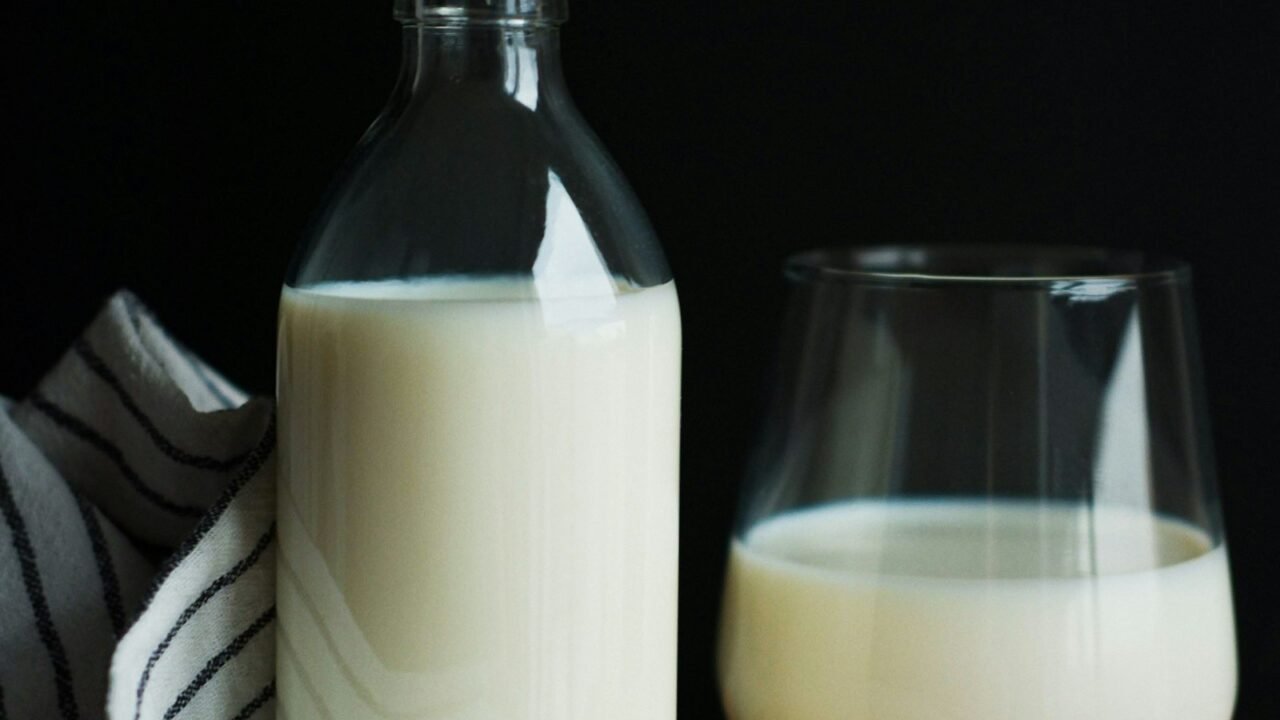
Milk provides calcium, protein and other important nutrients. Here’s how it changes with age:
| Age | Milk guidance |
|---|---|
| Under 12 months | Breast milk or infant formula as the main drink. Cows’ milk can be used in cooking and mixed with food from around 6 months, but not as a main drink. |
| From 12 months | Pasteurised whole milk or semi-skimmed milk can be a main drink. |
| Under 5 years | Skimmed and 1% milk aren’t suitable as a main drink. |
| Under 5 years | Rice drinks shouldn’t be used as a substitute for breast milk, formula or cows’ milk. |
Unsweetened, calcium-fortified plant drinks (such as soya or oat) can be used for children over one as part of a healthy diet if your child doesn’t have cows’ milk — check with your health visitor or GP if milk makes up a large part of their diet.
Too much milk can fill children up and leave little room for food, so if your toddler drinks a lot of milk and eats very little, it’s worth talking to your health visitor.
Fruit juice and smoothies
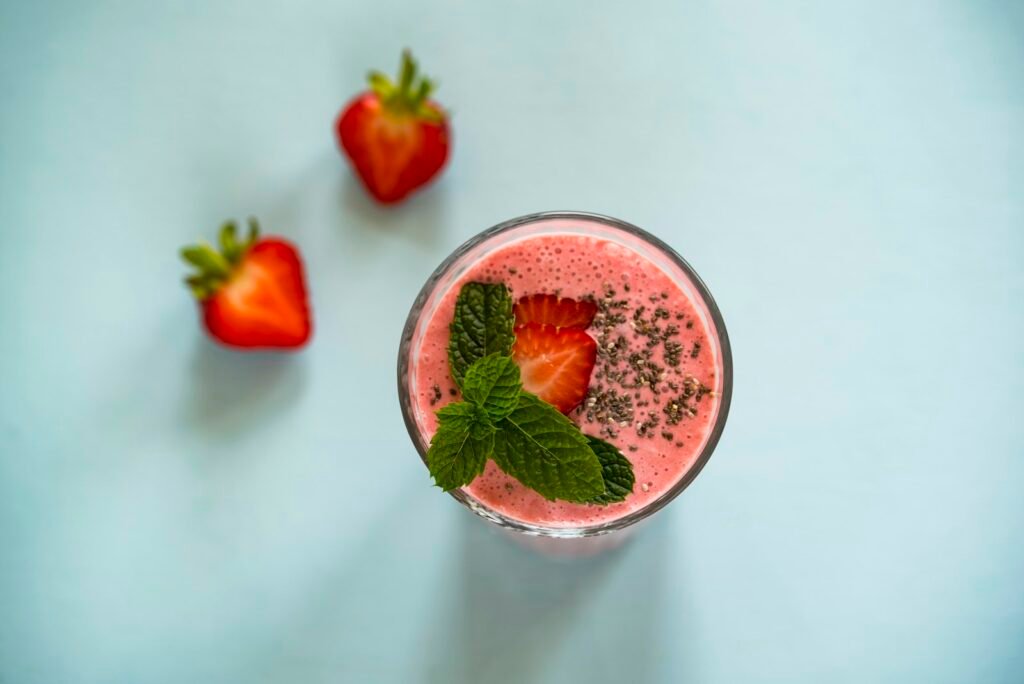
Fruit juice and smoothies contain vitamins, but blending and juicing release the natural sugars from the fruit, which can damage teeth. They’re best treated as an occasional part of a meal, not an everyday drink.
- Babies under 12 months don’t need fruit juice or smoothies.
- Young children: if you offer juice or smoothies, dilute them (one part juice to ten parts water) and serve them only with meals.
- From age five: undiluted juice or smoothies are fine, but stick to no more than one glass (about 150ml) a day, with a meal.
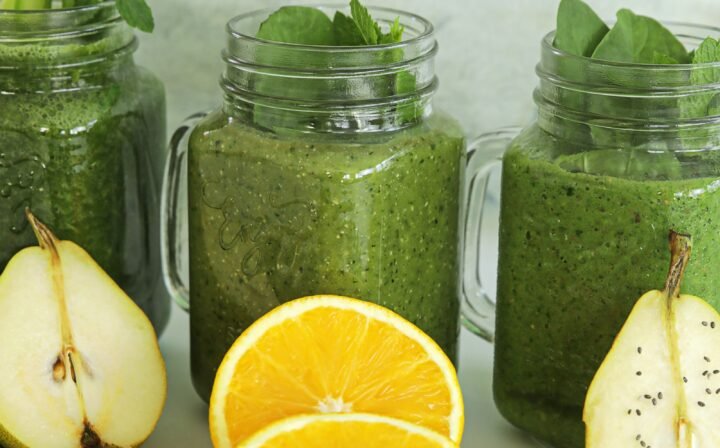
Giving juice and smoothies at mealtimes rather than between meals helps reduce the risk of tooth decay. Homemade smoothies with whole fruit, yogurt and even a few greens — like our Green Monster Smoothie — are a nutritious option at breakfast.
Not the best drinks for kids: what to avoid
- Fizzy drinks are acidic and can damage tooth enamel, and most contain lots of sugar.
- Squash, “juice drinks” and flavoured milks contain sugar and can cause tooth decay, even when diluted.
- Diet and “no added sugar” drinks aren’t recommended for young children, as they can still encourage a sweet tooth.
- Tea and coffee aren’t suitable for young children; caffeinated energy drinks aren’t suitable for children at all.
From bottles to cups
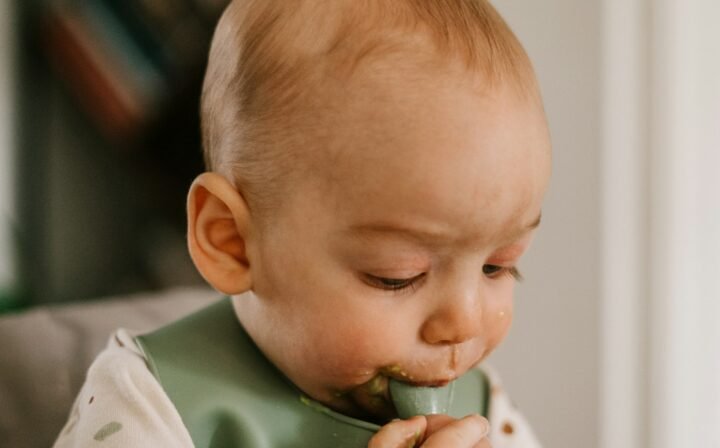
Introducing an open cup or a free-flow cup (without a valve) from around six months helps babies learn to sip and is better for their teeth. It will be messy at first — that’s normal. Once your baby is one year old, feeding from a bottle should be discouraged.
How much should children drink?
Needs vary with age, activity and weather, so there’s no single number. A practical approach is to offer a drink with every meal and snack, plus extra on hot days and after exercise. Pale yellow wee is a good sign that a child is drinking enough. Stick to the best drinks for kids, water and milk, and you can’t go far wrong.
Make the best drinks for kids a family habit
- Water on the table at every meal.
- Milk at breakfast or bedtime routine (followed by teeth brushing).
- Juice and smoothies only with meals, in small glasses.
- No sugary drinks kept at home as everyday options.
- A water bottle in every school bag.
Cutting back on sugary drinks is one of the most effective ways to reduce sugar overall. For more ideas, read how to cut back on sugar without the tantrums.
The best drinks for kids at a glance
| Drink | Verdict |
|---|---|
| Water | The best drinks for kids at any time of day |
| Milk | One of the best drinks for kids from 12 months, as part of a balanced diet |
| Juice and smoothies | Small glass, with meals, diluted for young children |
| Squash and fizzy drinks | Not suitable for young children |
Keeping to the best drinks for kids is one of the simplest ways to protect teeth and cut sugar. For more, see our guides to calcium for kids and healthy eating for kids.
Frequently asked questions
Can my child drink fruit juice every day?
Children over five can have a small glass (about 150ml) of fruit juice or smoothie a day, with a meal. Younger children who have juice should have it well diluted and only at mealtimes. Water and milk should still be the main drinks.
Is flavoured water one of the best drinks for kids?
Many flavoured waters contain sugar or sweeteners, so check the label. Adding slices of fresh fruit, cucumber or mint to plain water is a simple homemade alternative.
How can I get my child to drink more water?
Make water easy to reach: a filled bottle in the school bag, a jug on the table and a fun cup they chose themselves. Children also copy adults, so drinking water at meals yourself really helps.
The bottom line
The best drinks for kids are the simplest: water throughout the day and milk as part of a balanced diet. Keep juice and smoothies small and at mealtimes, save sugary drinks for rare occasions, and move from bottles to open cups early. These habits protect teeth, support appetite at meals and cut sugar without any arguments.
Sources and further reading