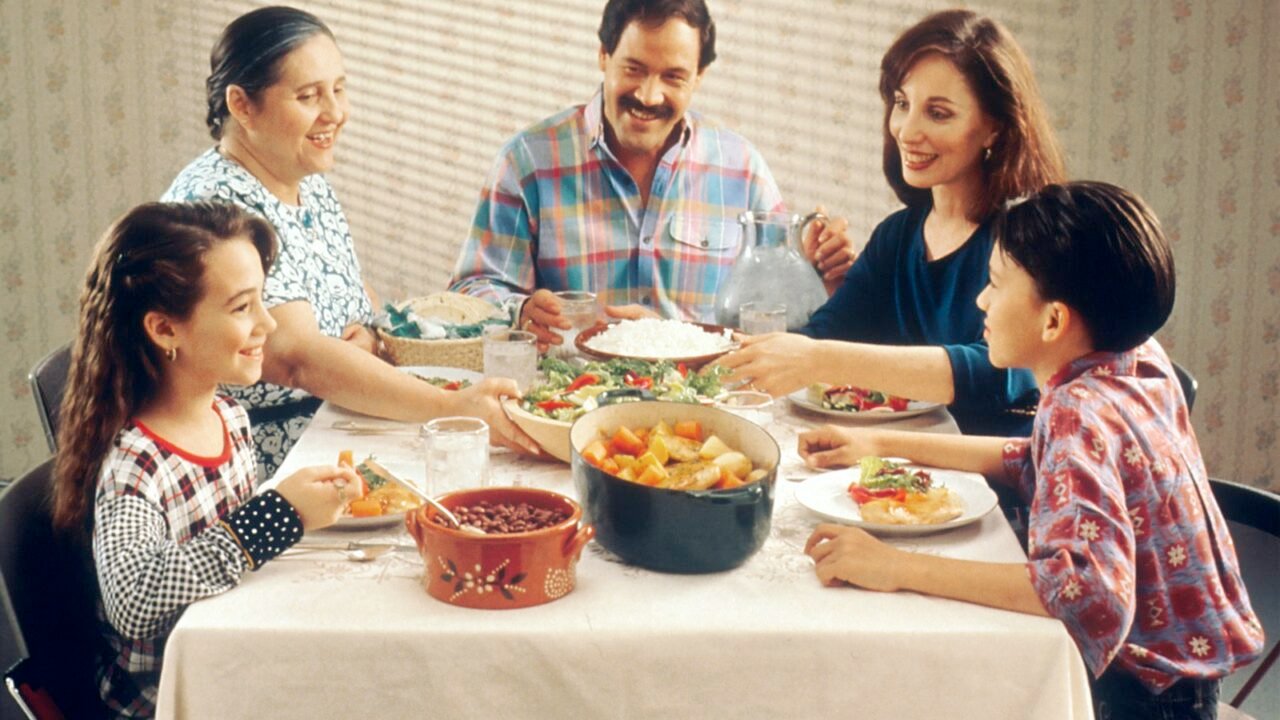
Family mealtimes can feel like a luxury in a busy week. Work, school, clubs and screens pull everyone in different directions, and eating at different times is often easier. But sitting down together, even a few times a week, is one of the simplest and most powerful habits a family can build.
Here are eight benefits of family mealtimes for children, plus practical ways to make eating together happen, even on hectic days.
Key takeaways
- Regular family mealtimes are linked with healthier diets and better eating habits in children.
- Eating together helps picky eaters try new foods by watching others.
- Meals are a daily chance to talk, connect and build routine.
- It doesn’t have to be dinner or every day; any shared meal counts.
8 benefits of family mealtimes
1. Healthier diets
Research has repeatedly linked regular family meals with better diet quality in children, including eating more fruit and vegetables. When families eat together, meals are more likely to be home-cooked and balanced.
2. More adventurous eating
Children learn by copying. When they see parents and siblings enjoying a variety of foods, they’re more likely to try those foods themselves. Family mealtimes are one of the best tools for helping picky eaters; see our guide to trying new foods.
3. Better appetite awareness
Calm, unhurried family mealtimes without screens help children notice when they’re hungry and full. The division of responsibility works best at a shared table.
4. Stronger connection
A shared meal is often the only time in the day when everyone is in the same place. It’s a chance to talk, laugh and catch up.
5. Language and conversation skills
For young children, mealtime conversation is a rich source of new words and a chance to practise listening and taking turns.
6. Routine and security
Predictable family mealtimes give children structure. Knowing when meals happen also reduces grazing and helps children arrive at the table hungry.
7. Life skills
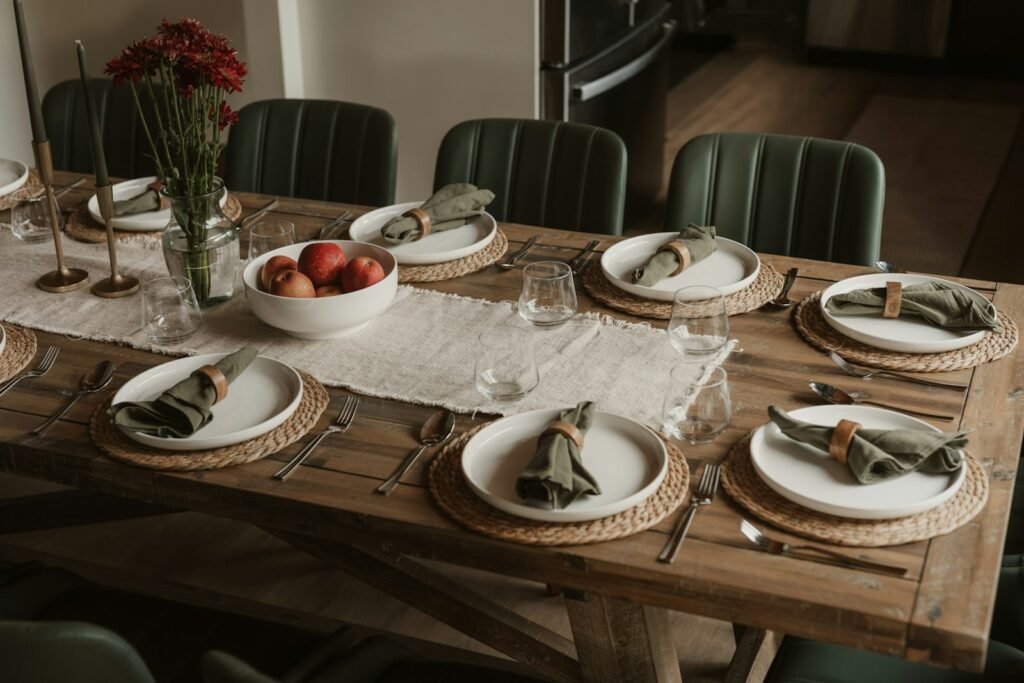
Setting the table, passing dishes, serving themselves and helping clear up all build independence and manners.
8. Fewer food battles
When the focus is on being together rather than on how much each child eats, mealtime battles often fade. Our guide to ending mealtime battles explains more.
How to make family mealtimes happen
Start small
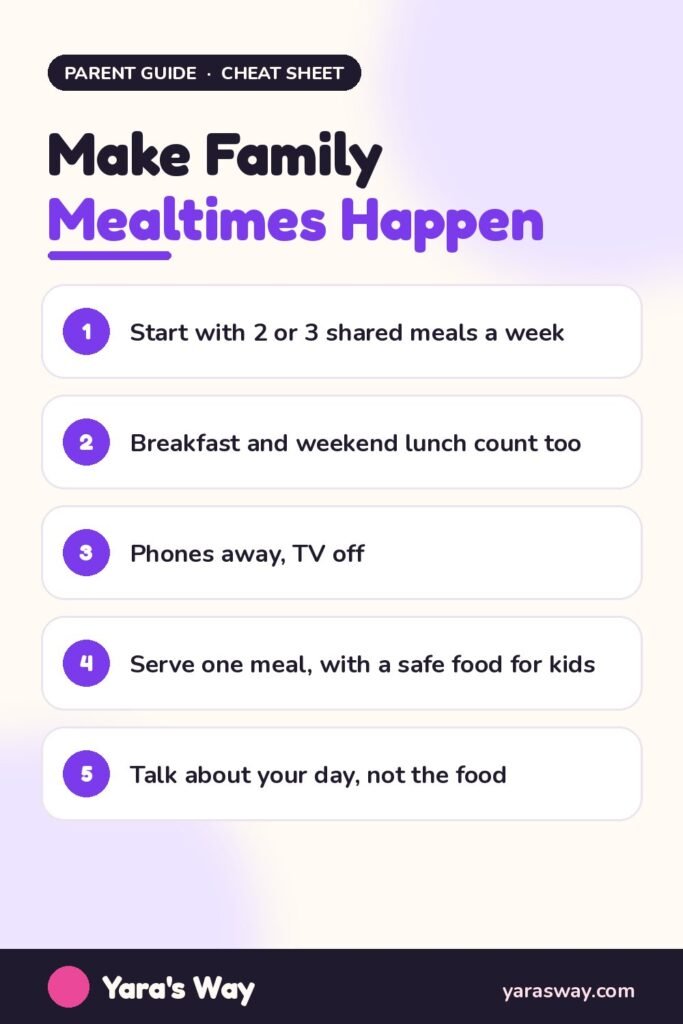
If you rarely eat together now, aim for two or three family mealtimes a week. That’s a realistic, meaningful start.
Any meal counts
Dinner isn’t the only option. Weekend breakfast, Sunday lunch or a quick after-school snack together all count as family mealtimes.
Keep the food simple
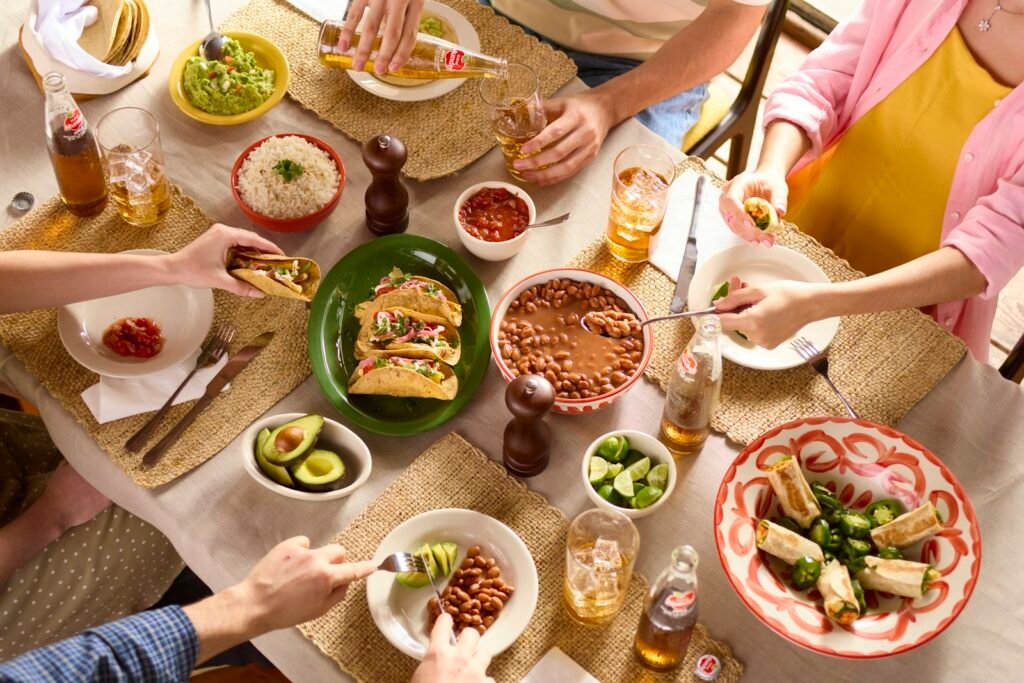
Family mealtimes don’t need elaborate cooking. Beans on toast eaten together is better than a fancy dinner eaten alone. Our family dinner ideas and freezer meals make it easier.
Serve one meal for everyone
Cook one family meal and include at least one food each child usually eats. Avoid cooking separate meals; it’s exhausting and doesn’t help children try new foods.
Switch off screens
Phones away and the TV off. Screens pull attention away from food and from each other.
Make conversation easy
Try simple games: “rose and thorn” (the best and hardest part of your day), “would you rather”, or let each person ask one question. Avoid turning meals into a lecture about eating.
Involve the children
Let children help plan the menu, cook, set the table or light a candle. Children who help are more invested in the meal. See our guide to cooking with kids by age.
Family mealtimes with toddlers
Family mealtimes with toddlers can be messy and short, and that’s fine. Bring the high chair to the table, give your toddler some of the same food in a safe form, and expect them to be done after 10 to 15 minutes. Even brief shared meals teach toddlers that eating is a social, enjoyable activity. Our guide to toddler meals shows how to adapt family food.
Family mealtimes with teenagers
Teenagers may be busy and less keen, but family mealtimes still matter. Keep them relaxed, let teens choose or cook a meal sometimes, and avoid using the table for difficult conversations. A regular, pressure-free meal is a valuable space to stay connected.
Conversation starters for family mealtimes
Not sure what to talk about? Keep a jar of question cards on the table and let children pick one at each meal. A few ideas to get started:
- What made you laugh today?
- If you could eat dinner anywhere in the world, where would it be?
- What’s one thing you’d like to learn to cook?
- Who did you help today, and who helped you?
- If our family had a theme song, what would it be?
These simple questions keep the focus on connection rather than on what’s on each plate, which makes family mealtimes more enjoyable for everyone. Over time, children often start bringing their own questions to the table, and family mealtimes become something they genuinely look forward to.
Frequently asked questions
How often should families eat together?
There’s no magic number. A few family mealtimes a week is a great goal, and any shared meal is better than none.
What if we can’t all eat at the same time?
Eat with whoever is home, or have a snack together while the children eat dinner. Weekend meals are a great time to gather everyone.
Should children stay at the table until everyone finishes?
For young children, a reasonable time at the table is enough. Long waits can make mealtimes stressful.
The bottom line
Family mealtimes are a simple habit with big rewards: healthier eating, braver tasters, stronger connections and calmer meals. Start small, keep the food simple, switch off screens and focus on enjoying each other’s company. The table is one of the best places to raise happy, healthy eaters.
Sources and further reading