“Eat the rainbow” is one of the simplest pieces of nutrition advice there is — and one of the most useful for families. Instead of counting nutrients or worrying about portions, you just ask one question: how many colours can we get on the plate today?
For children, it turns healthy eating into a game. For parents, it’s an easy way to make sure meals include a wide variety of fruit and vegetables. Here’s why it works and how to make it part of everyday life.
Key takeaways
- Different colours in fruit and veg come from different natural plant compounds, so variety brings a wider mix of nutrients.
- Aim for a few different colours across each day, not a perfect rainbow on every plate.
- Make it a game: charts, challenges and letting kids pick colours at the shops.
Why eat the rainbow?
The colours in fruit and vegetables come from natural plant compounds, and different colours tend to bring different nutrients. Orange foods like carrots and squash are rich in beta-carotene, which the body uses to make vitamin A. Dark green leafy vegetables provide folate and other vitamins. Red and purple foods, such as berries and beetroot, contain their own families of plant compounds.
No single fruit or vegetable has everything. Eating a variety of colours is a simple way to get a wider range of vitamins, minerals and fibre without having to think too hard about it.
Eat the rainbow: what counts for each colour?
| Colour | Kid-friendly examples |
|---|---|
| 🍓 Red | Strawberries, raspberries, tomatoes, red pepper, watermelon, red apples |
| 🥕 Orange & yellow | Carrots, squash, sweet potato, mango, sweetcorn, oranges, yellow pepper |
| 🥦 Green | Broccoli, peas, spinach, cucumber, kiwi, green beans, avocado |
| 🫐 Blue & purple | Blueberries, blackberries, beetroot, red cabbage, purple grapes, plums |
| 🍌 White & brown | Cauliflower, banana, mushrooms, onion, parsnip, chickpeas |
Fresh, frozen, tinned and dried all count — frozen fruit and vegetables are just as nutritious and much more convenient. Choose tinned fruit in juice rather than syrup, and tinned vegetables without added salt where possible.
Ideas to eat the rainbow at every meal
Breakfast
- Porridge topped with berries (purple) and banana (white).
- Spinach Monster Pancakes (green) with strawberries (red).
- A pink sunshine smoothie.
Lunch
- A Rainbow Bento Lunchbox with five colours in separate compartments.
- Wraps with grated carrot, cucumber ribbons and red pepper.
- Pasta salad with peas, sweetcorn and tomatoes.
Snacks
- Veg sticks in three colours with hummus.
- Apple nachos with a sprinkle of berries.
- Beetroot pink muffins (purple, hidden!).
Dinner
- Mini pizzas with a topping in every colour.
- Stir-fry with broccoli, carrot, red pepper and red cabbage.
- Hidden-veggie mac and cheese with peas on the side.
Make eat the rainbow a game
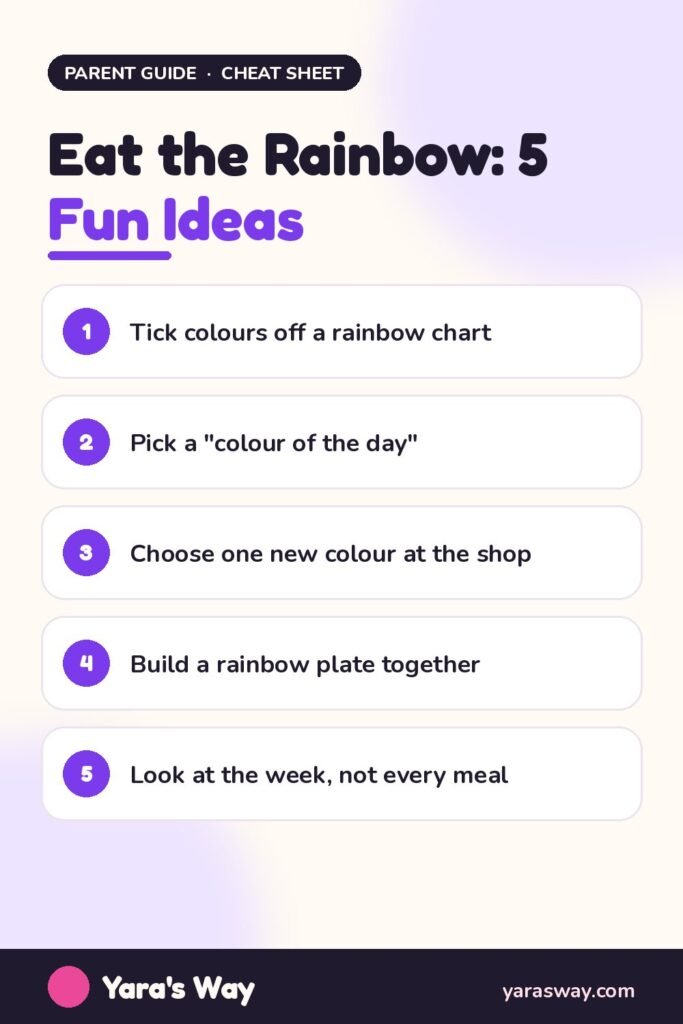
Use an eat the rainbow chart
Let children tick off each colour they eat during the day. We made a free, printable one: try the Rainbow Challenge chart on our parents page. It saves progress in your browser and resets every week.
Colour of the day
Pick a colour each day and challenge the family to eat as many foods of that colour as possible. “Purple Tuesday” is surprisingly fun.
Rainbow shopping
At the supermarket, ask your child to choose one fruit or vegetable for each colour. Children are far more likely to try foods they picked themselves.
Build a rainbow plate
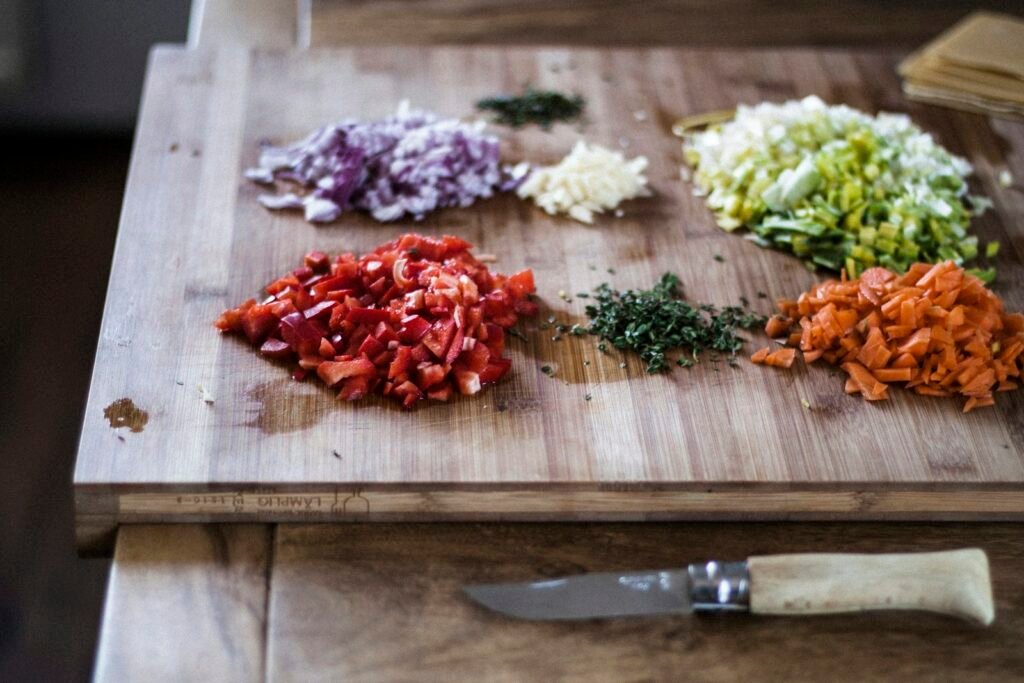
Give children small bowls of chopped fruit and veg and let them arrange their own rainbow. Taking a photo of their creation makes it even more exciting.
Keep it relaxed
Eat the rainbow is a guide, not a rule. A child who eats three colours today is doing well. If a colour is missing for a few days, it’s fine — look at the week as a whole. And as with all foods, keep offering colours that get refused, without pressure. Tastes change, and repeated exposure is what helps children learn to enjoy new foods.
Safety note for little ones
When building a rainbow for babies and young children, cut small round foods like grapes, cherry tomatoes and blueberries into quarters, and cut harder vegetables into soft-cooked batons. Always supervise young children while they eat.
A rainbow shopping list
Stocking the kitchen with a few colours makes eating the rainbow almost automatic. A simple weekly list could include:
- Red: cherry tomatoes, red pepper and strawberries (frozen work well in smoothies).
- Orange and yellow: carrots, sweet potatoes, satsumas and tinned sweetcorn.
- Green: cucumber, broccoli, frozen peas and a bag of spinach.
- Blue and purple: frozen blueberries, beetroot and red cabbage.
- White and brown: bananas, cauliflower, mushrooms and a tin of chickpeas.
Frozen and tinned options keep for weeks, so there’s always a colour available even when the fresh drawer is empty.
Eat the rainbow all year round
It’s easiest to eat the rainbow in summer, when berries and tomatoes are everywhere, but it’s possible all year. In autumn and winter, eat the rainbow with squash, carrots, beetroot, red cabbage, apples, pears and satsumas, and lean on frozen berries and peas. Frozen and tinned produce make it simple to eat the rainbow on a budget too; see our budget family meals. For more ways to help your family eat the rainbow, read our guide to vegetables for kids.
Frequently asked questions
Does my child need to eat every colour every day?
No. Aim for variety across the week rather than a perfect rainbow every day. Some days will be very green and others very orange, and that’s completely fine.
What if my child only eats one or two colours?
Start from what they like. If they love orange foods, offer carrots, sweet potato and mango, then place a small amount of a new colour alongside without pressure. Our guide to helping picky eaters has more ideas.
Do fruit juices count towards the rainbow?
Whole fruit and vegetables are better. Juice lacks most of the fibre in whole fruit and its sugars can harm teeth, so keep it to a small glass with a meal.
Is eating the rainbow suitable for babies?
Yes. Offering a variety of colourful vegetables and fruit is a great way to introduce new tastes during weaning, as long as foods are prepared in a safe texture for your baby’s age.
The bottom line
Eating the rainbow is a fun, simple way to help children enjoy a wide variety of fruit and vegetables. Keep a few colours in the kitchen, turn it into a game and look at the week as a whole rather than every single meal. Little by little, a colourful plate becomes the normal plate.
Sources and further reading