Choosing first foods for your baby is an exciting milestone, and often a slightly nerve-racking one. What should you start with? How much should they eat? When can you introduce eggs or peanuts? Every parent asks these questions.
The good news is that weaning doesn’t need to be complicated. This guide shares 20 easy first foods from around six months, explains how to move through textures, and covers the key safety rules, all based on NHS advice.
Key takeaways
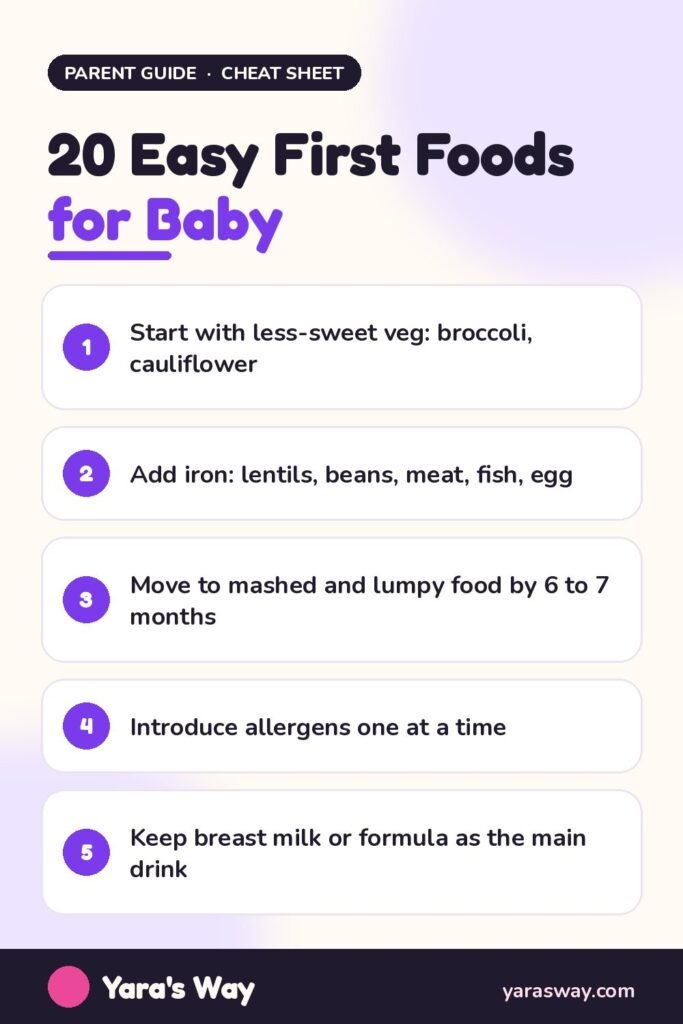
- The NHS recommends introducing first foods at around six months.
- Start with vegetables, including less-sweet ones like broccoli and cauliflower.
- Include iron-rich first foods such as lentils, beans, meat, fish and eggs.
- Introduce allergens one at a time and keep breast milk or formula as the main drink.
When to start first foods
Most babies are ready for first foods at around six months. Look for the three signs of readiness: your baby can sit up and hold their head steady, can look at food, pick it up and put it in their mouth, and can swallow food rather than pushing it out. Start with a small amount once a day, at a time that suits you both, and gradually build up.
Breast milk or first infant formula remains your baby’s main source of nutrition throughout the first year, so continue milk feeds as usual. Cows’ milk can be used in cooking from around six months, but shouldn’t be given as a main drink until 12 months.
20 easy first foods for baby
Vegetables
The NHS suggests starting with vegetables that aren’t so sweet, which can help babies accept a wider range of tastes later on.
- Broccoli
- Cauliflower
- Spinach (mixed into other foods)
- Courgette
- Carrot
- Parsnip
- Sweet potato
- Butternut squash
Fruit
- Banana
- Avocado
- Pear (soft or cooked)
- Apple (cooked until soft)
- Berries (mashed or squashed)
Iron-rich and protein first foods
Babies’ natural iron stores start to run low at around six months, so iron-rich first foods are especially important.
- Lentils and dhal
- Mashed beans and chickpeas
- Soft-cooked chicken or meat, finely chopped or shredded
- Fish without bones, such as salmon or cod
- Eggs (British Lion eggs can be lightly cooked)
Starchy foods and dairy
- Porridge made with your baby’s usual milk
- Full-fat plain yoghurt
Moving through textures
Early first foods can be smooth purées, mashed food or soft finger foods. The NHS advises moving on to mashed and finger foods as soon as your baby is ready, and offering lumpier textures from around six to seven months. Babies who stay on smooth purées for a long time can find it harder to accept lumps later.
| Age | Textures |
|---|---|
| Around 6 months | Smooth or mashed food, plus soft finger foods |
| 7 to 9 months | Mashed and lumpy food, more finger foods, three meals a day |
| 10 to 12 months | Chopped family food, wider variety, three meals plus milk |
If you’d like to try feeding your baby finger foods only, our guide to baby led weaning explains how.

Introducing allergens as first foods
Foods that can trigger allergies include cows’ milk, eggs, foods containing gluten, nuts and peanuts, seeds, soya, fish and shellfish. The NHS advises introducing these from around six months, one at a time, in very small amounts so you can spot any reaction. Delaying peanut and hen’s egg beyond six to twelve months may increase the risk of developing an allergy. Once a food is tolerated, keep it as part of your baby’s usual diet.
Always serve nuts finely ground or as smooth nut butter, never whole. If your baby already has eczema or a food allergy, or there’s a family history of allergies, speak to your GP or health visitor first. Read our guide to food allergies in kids for the signs to look out for.
First foods to avoid
- Salt and salty foods like stock cubes and processed meats.
- Sugar, sugary snacks and sweet drinks.
- Honey before 12 months.
- Whole nuts before five years.
- Raw or lightly cooked eggs without the British Lion mark.
- Rice drinks before five years.
- Shark, swordfish and marlin.
Preparing first foods safely
Wash your hands and surfaces, cook food thoroughly and let it cool before serving. If you make first foods in batches, cool them quickly, freeze them in small portions such as ice cube trays, defrost in the fridge, and reheat until steaming hot before cooling. Don’t reheat food more than once, and don’t save leftovers from your baby’s bowl. Our guide to freezer meals for kids has more batch-cooking tips.
Make mealtimes social
Whenever you can, let your baby sit with the family while they explore their first foods. Babies learn by watching, and seeing you enjoy broccoli, lentils or fish helps them feel these foods are safe. Talk about colours and textures, smile, and don’t worry about mess. Short, relaxed meals build positive feelings about food that last well into the toddler years.
Vitamins alongside first foods
The NHS recommends that babies and children from six months to five years have daily vitamin A, C and D supplements, unless they’re having more than 500ml of infant formula a day. Breastfed babies should have a daily vitamin D supplement from birth. Ask your health visitor about free Healthy Start vitamins.
Frequently asked questions
What’s the best first food for a baby?
There’s no single best one. Vegetables like broccoli and cauliflower are a great start, followed by a variety of fruits, iron-rich foods and starchy foods.
How much should my baby eat at first?
Just a few teaspoons or a few pieces of finger food. Let your baby decide how much, and keep milk feeds going.
When can my baby eat family meals?
From around six to seven months, mashed or soft family food made without salt is fine. By 12 months, most babies can eat chopped family meals. See our toddler meals guide for what comes next.
The bottom line
First foods are the start of your baby’s lifelong relationship with food. Begin at around six months, offer vegetables, fruit, iron-rich foods and allergens one at a time, move on to lumpier textures by six to seven months and keep milk feeds going. Above all, keep it relaxed and enjoy discovering new tastes together.