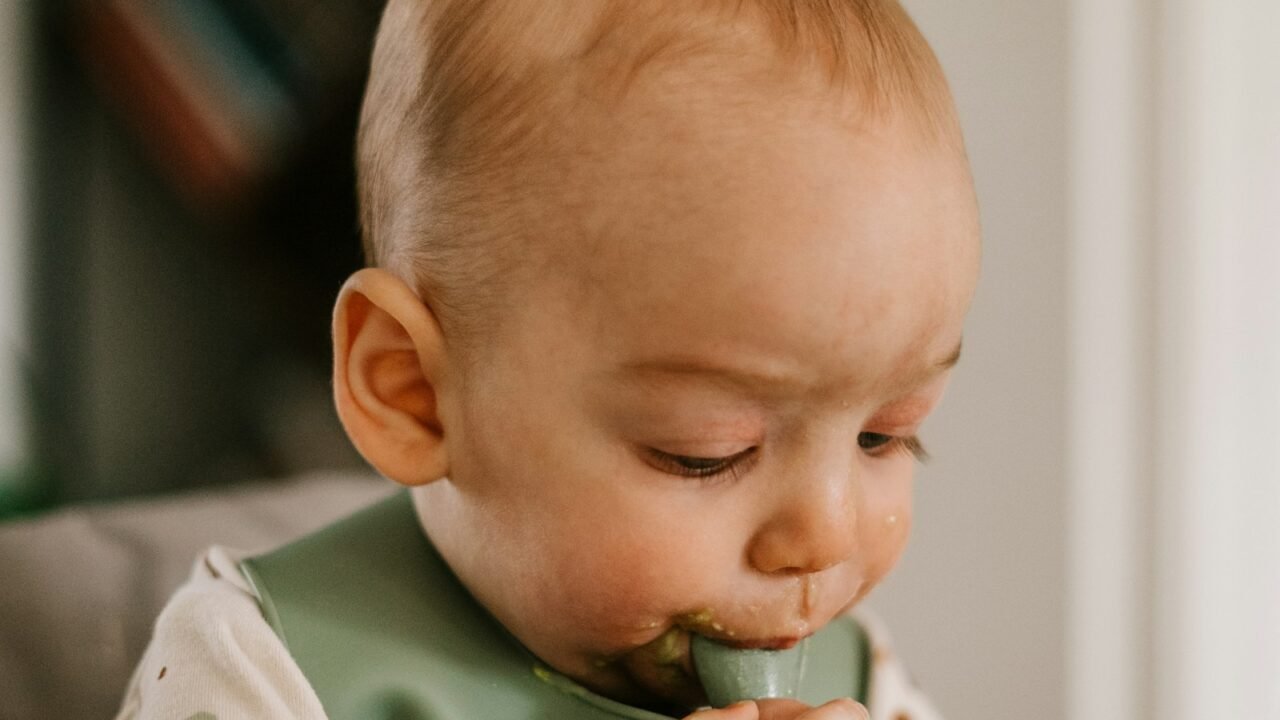
Baby led weaning is an approach to starting solid foods where your baby feeds themselves soft finger foods from the start, instead of being spoon-fed purées. Babies explore food at their own pace, join in with family meals, and learn to chew, grab and taste for themselves.
Many parents love baby led weaning because it’s relaxed and lets babies share family food. But it’s natural to feel nervous about gagging, choking and what to offer. This simple guide walks you through the first six weeks, based on NHS advice.
Key takeaways
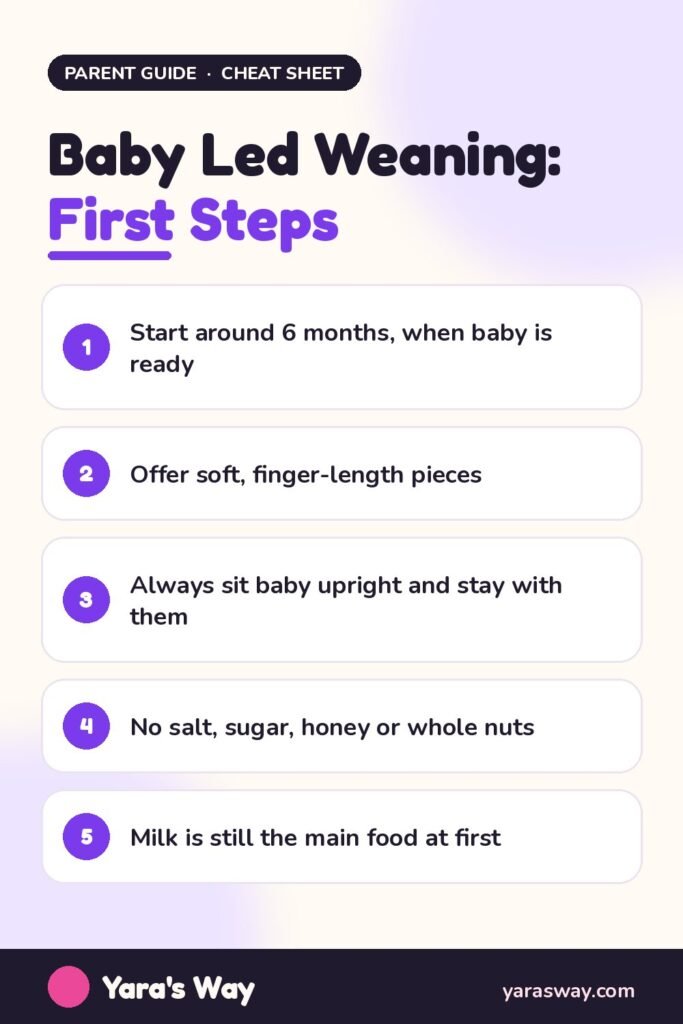
- The NHS recommends starting solid foods at around six months.
- Baby led weaning uses soft, finger-length pieces of food your baby can hold.
- Gagging is normal; always stay with your baby and know the signs of choking.
- Avoid salt, sugar, honey (under one) and whole nuts, and keep milk feeds going.
What is baby led weaning?
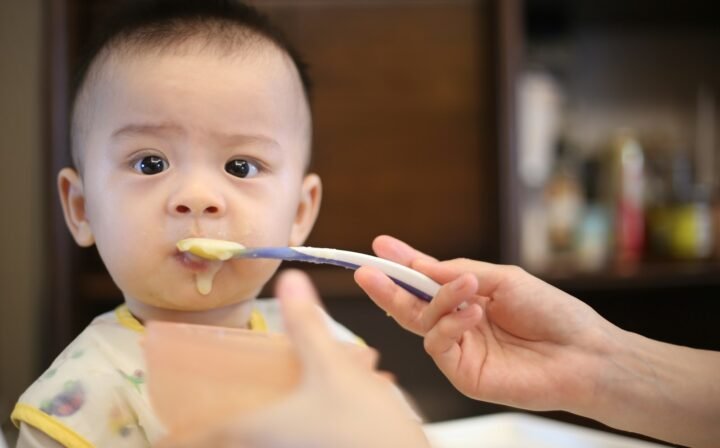
With traditional weaning, parents spoon-feed smooth purées and gradually move to lumpier textures. With baby led weaning, babies skip the purée stage and feed themselves soft pieces of food. Many families do a mix of both, offering finger foods alongside spoon-fed meals, and that’s absolutely fine. The NHS encourages offering finger foods from the start of weaning, and moving on to mashed and lumpy textures by around six to seven months.
When to start baby led weaning
The NHS advises starting solid foods at around six months. By then, most babies show three signs of readiness:
- They can stay in a sitting position and hold their head steady.
- They can coordinate their eyes, hands and mouth, so they can look at food, pick it up and put it in their mouth.
- They can swallow food rather than pushing it back out with their tongue.
Waking more at night, chewing fists or wanting extra milk feeds are normal baby behaviours and aren’t signs of being ready for solid food. If your baby was born prematurely or has a medical condition, ask your health visitor before starting.
Best first foods for baby led weaning
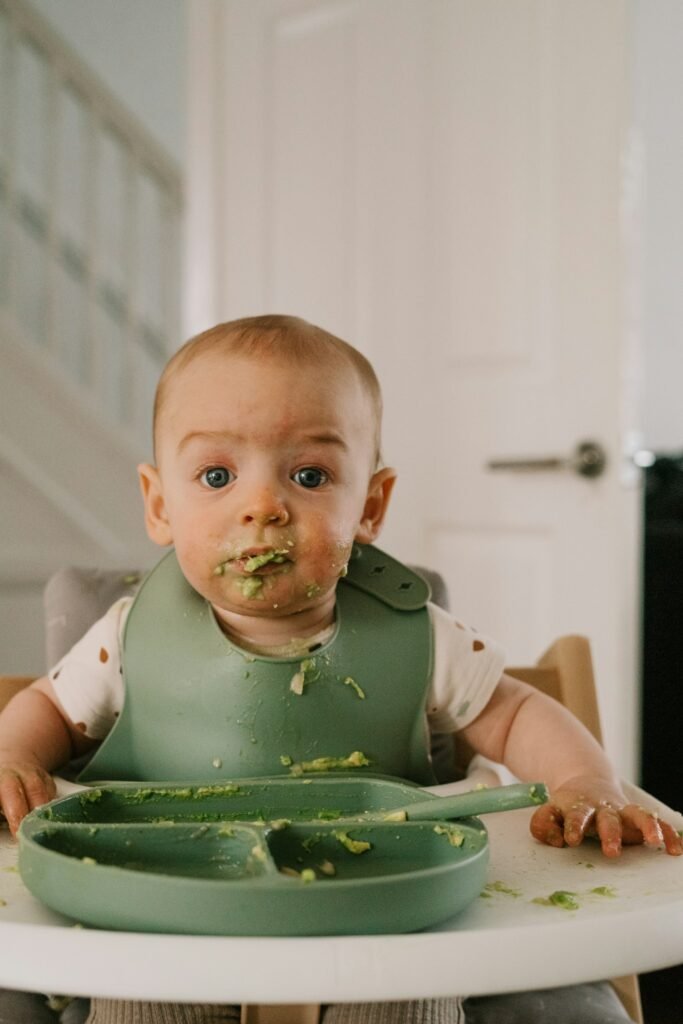
Cut food into pieces about the size and shape of your finger, so your baby can grip it in their fist with some sticking out of the top. Food should be soft enough to squash between your finger and thumb.
- Vegetables: steamed broccoli florets, soft-cooked carrot and parsnip sticks, roasted sweet potato wedges. The NHS suggests starting with vegetables that aren’t so sweet, like broccoli and cauliflower.
- Fruit: ripe banana, soft pear or avocado slices.
- Starchy foods: toast fingers, soft pasta shapes, porridge fingers.
- Protein: strips of omelette, soft-cooked fish without bones, shredded chicken, mashed beans or lentils.
- Dairy: full-fat plain yoghurt (offered on a preloaded spoon) and grated or sliced pasteurised cheese.
Our guide to first foods for baby has a full list of ideas for spoon-feeding and finger foods.
A simple six-week baby led weaning plan
| Week | What to try |
|---|---|
| Week 1 | One small meal a day: single soft vegetables like broccoli and carrot sticks |
| Week 2 | More vegetables, plus soft fruit like banana and avocado |
| Week 3 | Add toast fingers, porridge fingers and soft pasta |
| Week 4 | Introduce protein: omelette strips, fish, chicken, beans and lentils |
| Week 5 | Two meals a day; introduce allergens one at a time (see below) |
| Week 6 | Simple family meals adapted without salt, plus lumpier textures |
Go at your baby’s pace. Some babies eat lots from day one; others mostly play with food for weeks. Both are normal, because in the early months breast milk or formula still provides most of their nutrition.
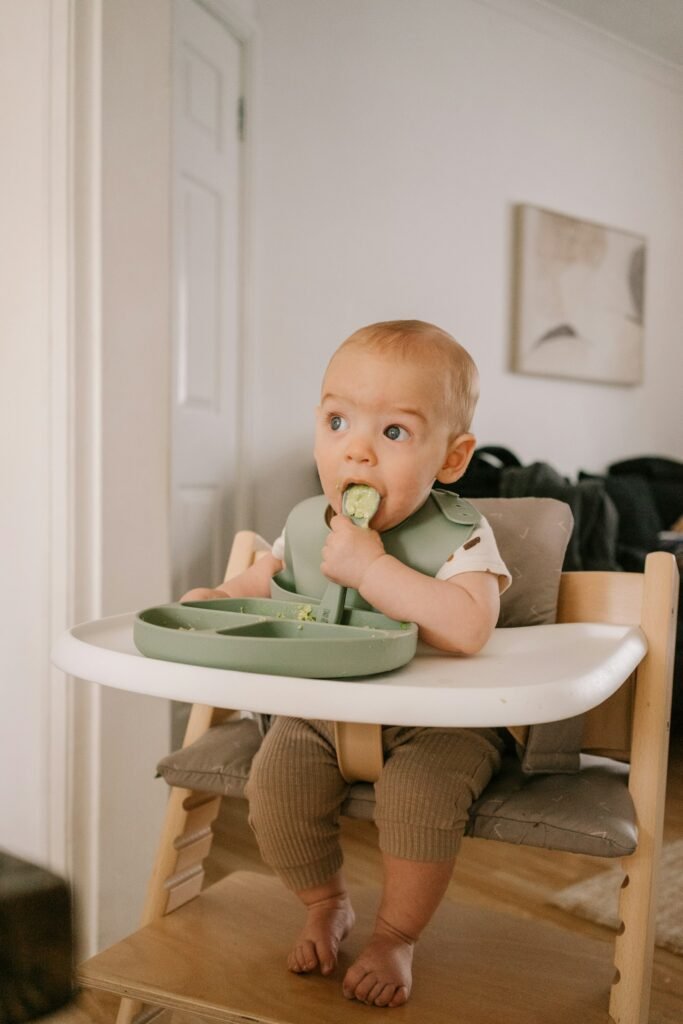
Gagging vs choking
Gagging is very common in baby led weaning and is part of learning to eat. It’s a natural reflex that pushes food forward when it’s too far back in the mouth. A gagging baby may cough, splutter, go red in the face and push their tongue out, but they’re still breathing and making noise.
Choking is different and is an emergency. A choking baby may be silent, unable to cough or cry, and may struggle to breathe. Always stay with your baby while they eat, make sure they’re sitting upright, and consider learning baby first aid so you know what to do.
To reduce choking risk, avoid whole nuts, cut small round foods like grapes and cherry tomatoes lengthways into quarters, and avoid hard foods like raw apple or carrot until your baby is older (grate them or cook until soft).
Foods to avoid during baby led weaning
- Salt: don’t add salt, and avoid salty foods like stock cubes, crisps and processed meats. Babies’ kidneys can’t cope with much salt.
- Sugar: no added sugar or sugary snacks and drinks.
- Honey: not until 12 months old.
- Whole nuts and peanuts: not until five years old; finely ground nuts and smooth nut butters are fine.
- Raw or lightly cooked eggs without the British Lion mark.
- Raw shellfish and shark, swordfish and marlin.
- Rice drinks and cows’ milk as a main drink before 12 months.
See the NHS list of foods to avoid for full details.
Introducing allergens
The NHS advises introducing foods that can trigger allergies, such as cows’ milk, eggs, gluten, nuts and peanuts (ground or as smooth butter), seeds, soya, fish and shellfish, one at a time and in very small amounts, from around six months. Once a food is tolerated, keep offering it as part of your baby’s usual diet. If your baby already has eczema or a food allergy, or there’s a family history, speak to your GP or health visitor first. Our guide to food allergies in kids explains the signs to watch for.
Frequently asked questions
Is baby led weaning better than spoon-feeding?
Both are fine. What matters most is offering a variety of foods and textures. Many families combine baby led weaning with some spoon-feeding.
How much should my baby eat?
At first, very little. Milk is still the main source of nutrition. Let your baby decide how much to eat, and offer milk feeds as usual.
Does my baby need water?
Offer sips of water from an open or free-flow cup with meals from around six months.
The bottom line
Baby led weaning lets babies explore real food at their own pace and join in with family meals. Start around six months when your baby is ready, offer soft finger-length foods, stay with them while they eat, avoid salt, sugar, honey and whole nuts, and enjoy the mess. Next, our guide to toddler meals will help as your little one grows.